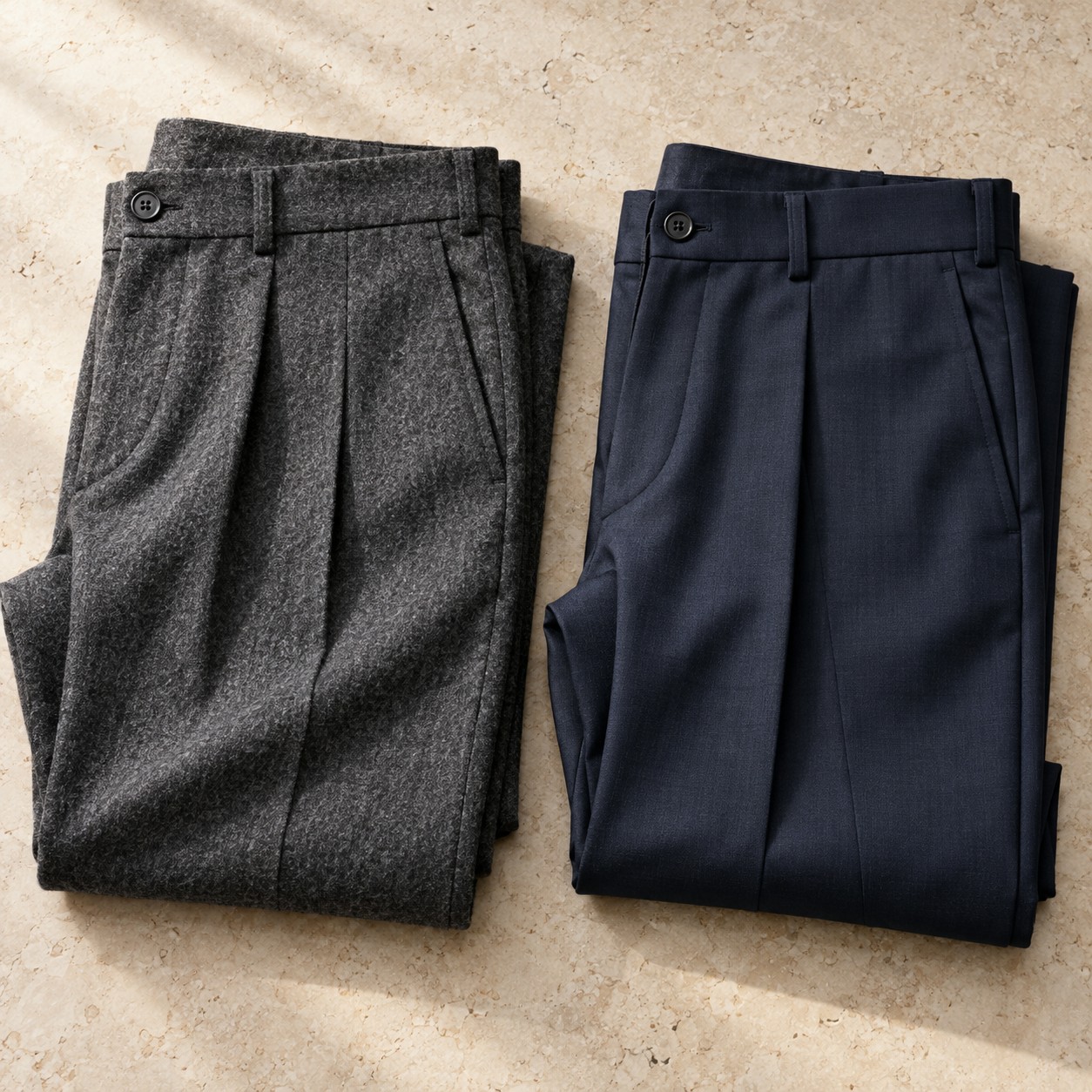
Fit & fabrics
Trouser length with trainers and loafers
Judge the hem over the actual shoe, not over bare feet in a fitting room.
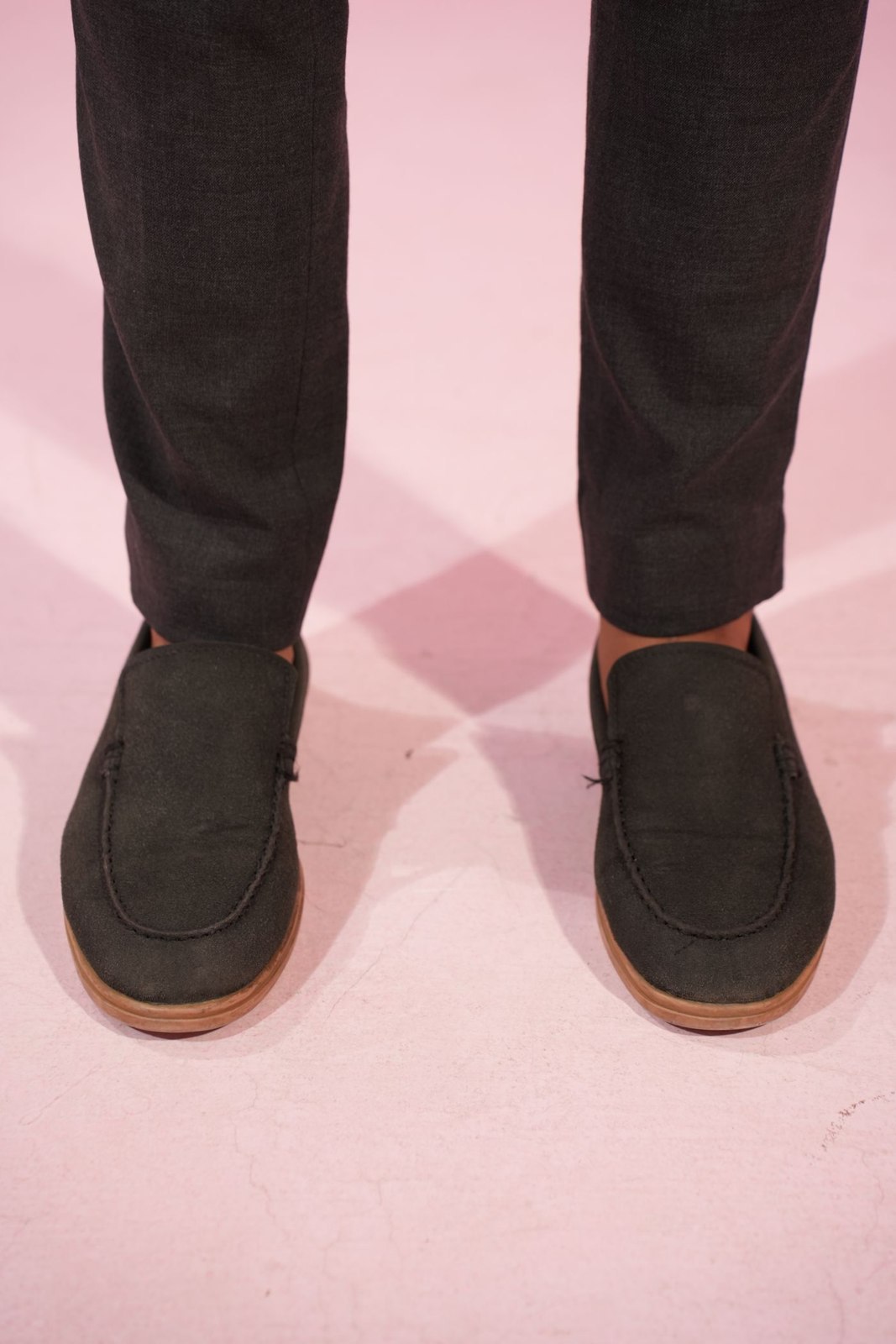
Bring the shoes into the decision
Trainers and loafers can meet the same trouser hem differently. A trainer may have a higher tongue and bulkier upper, while a loafer exposes more of the foot. Sole height also varies within both categories. Bring the pair you intend to wear most, or try the trousers with a close equivalent before agreeing to a permanent alteration.
Stand normally and allow the trousers to settle at their intended waist position. Pulling them higher for a photograph changes the apparent length. Look at the front, side and back, including whether the rear hem touches the ground. A tidy front does not compensate for fabric dragging behind the heel.
Balance length with leg opening
A narrow hem can catch on a trainer and create several folds even when the measured length seems modest. A wider leg may fall cleanly over the same shoe. Shortening can reduce stacking, but it does not change an opening that is too narrow for the intended effect.
With loafers, decide whether you want a visible ankle or a continuous line into socks. Neither choice is compulsory. Sit down and walk a few steps to see how much the hem rises and whether it catches on the back of the shoe. A cropped look should remain deliberate in motion rather than appearing accidental only when seated.
Choose the useful compromise
If one pair of trousers must work with both shoes, try both before hemming. You may find a length with a small fold over the trainer and a cleaner line above the loafer. If the difference is large, accept that one combination will be less exact or reserve the trousers for the shoe they suit better.
Ask the tailor to pin or temporarily baste the proposed length and view it from ordinary distance. Consider whether future adjustment should remain possible and discuss available hem allowance. Do not copy a number from another pair without comparing rise and leg shape. The most useful length is not a universal measurement; it is the point where this trouser, at its proper waist position, works with the footwear and movement it will actually encounter.