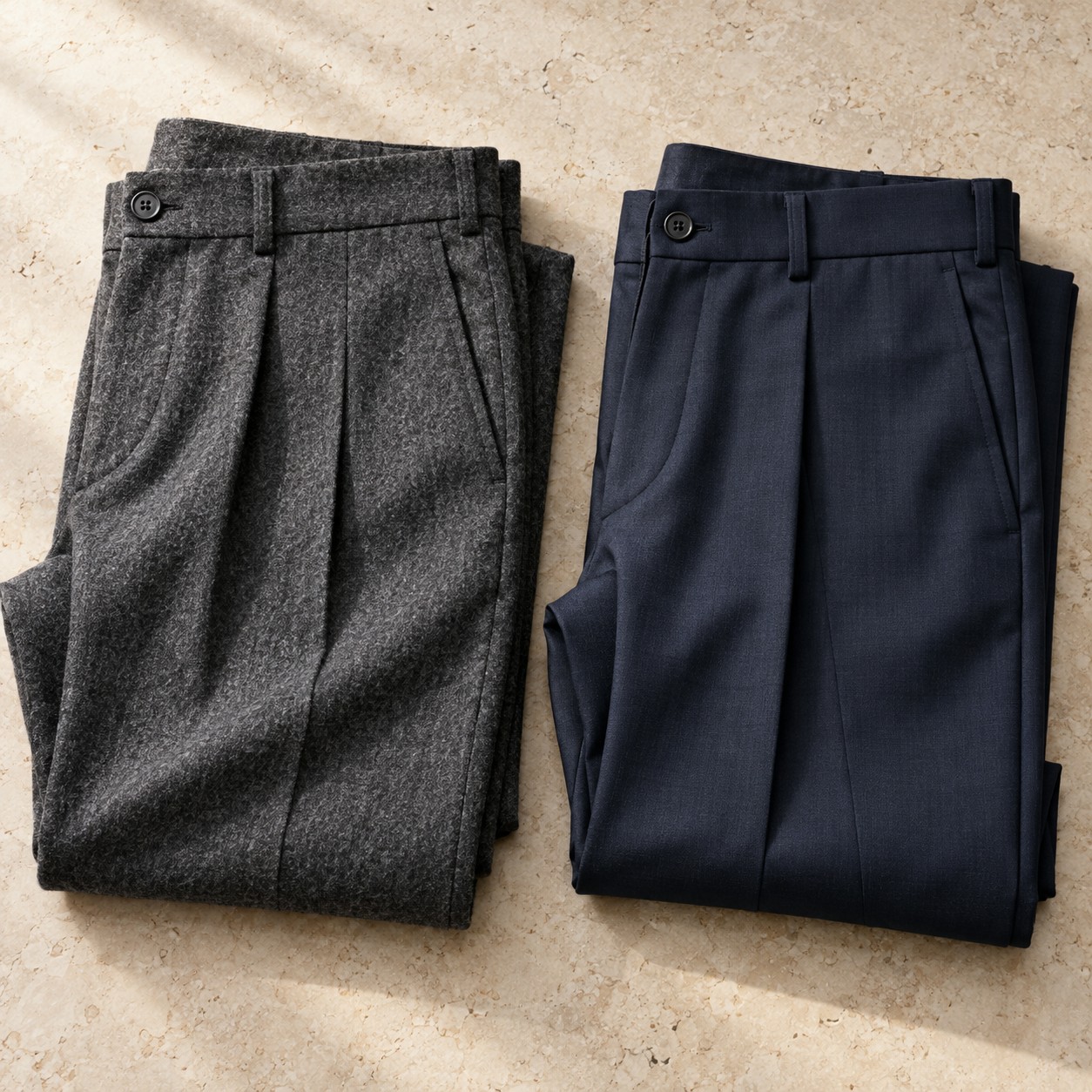
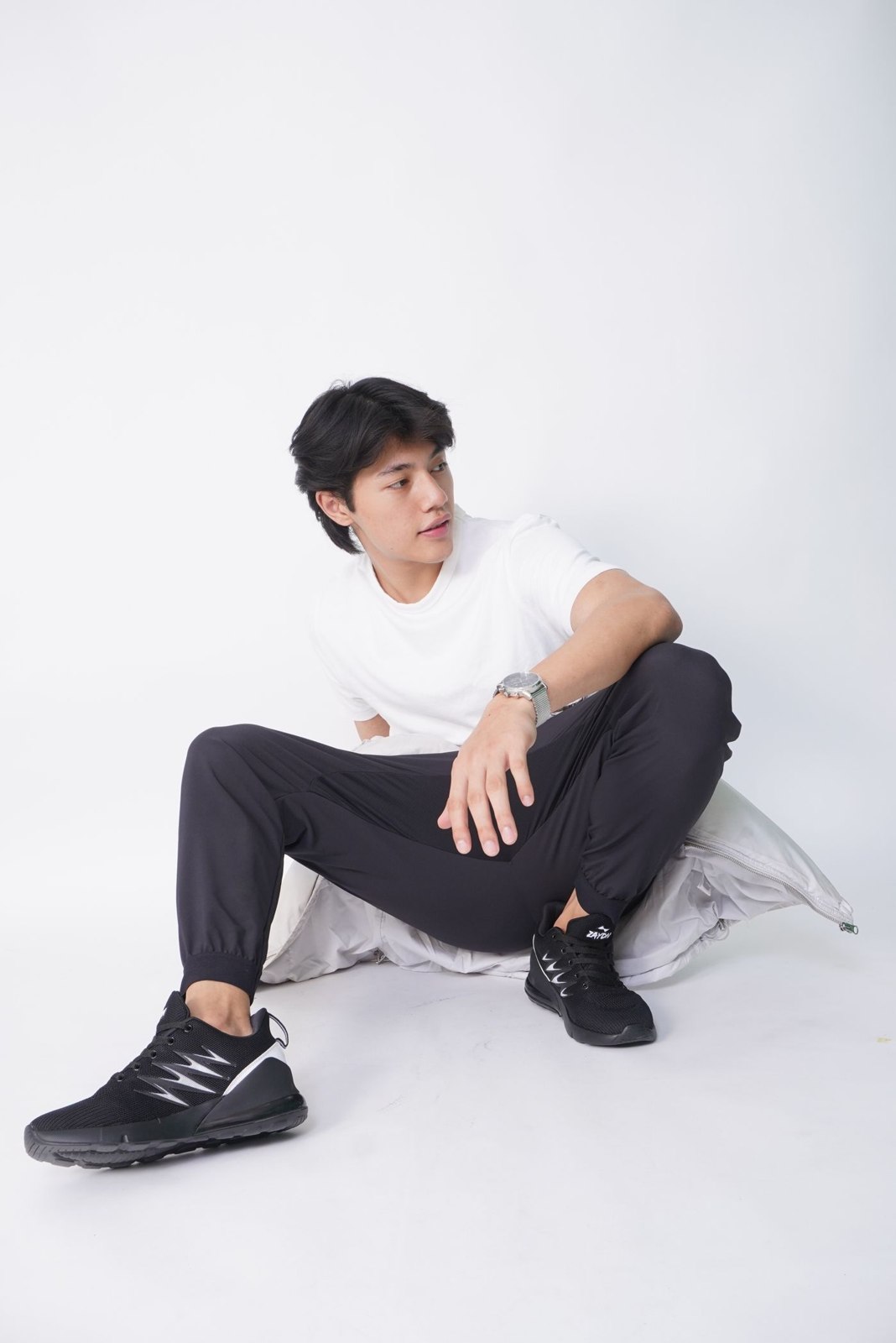
Fit & fabrics
Checking trouser rise before choosing a waist size
Decide where the trousers should sit before judging whether the waistband fits.
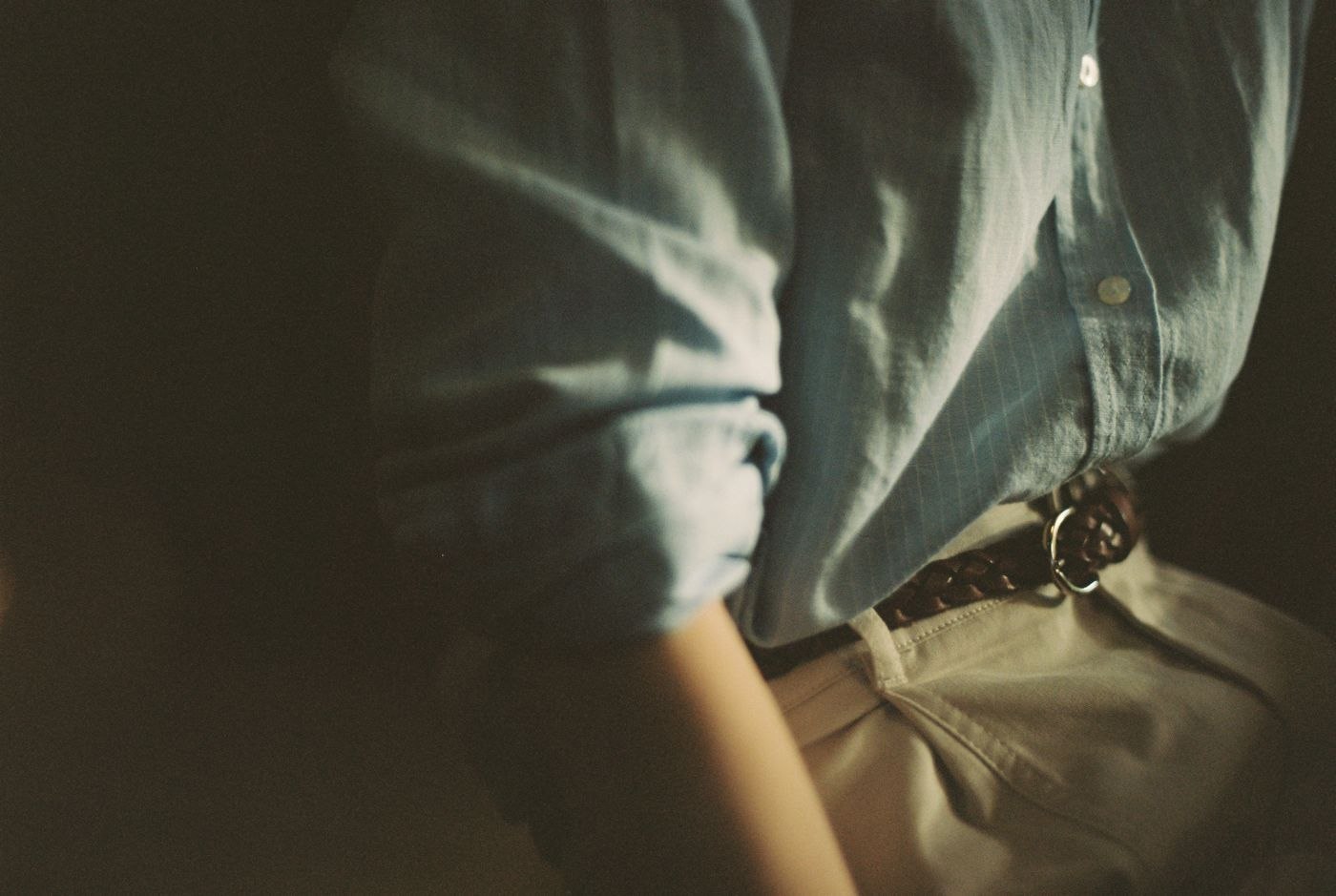
The waistband has a position
Two trousers with the same labelled waist can feel different because they sit at different heights. A lower rise places the band closer to the hips; a higher rise reaches further up the torso. Pulling a low-rise pair upwards to your preferred position can create pressure through the crotch without solving the fit.
Put the trousers where their cut naturally settles, then decide whether you like that position. Look at the distance between waistband and crotch rather than only the number on the label. Front and back rise both matter, especially when sitting. A pair can look acceptable from the front while pulling down at the back.
Try the movements that expose the difference
Sit on a normal chair, bend slightly and stand again. The band should not require constant repositioning. Notice whether the crotch pulls, the back gapes or the pockets spread. These signs can have several causes, so do not assume every problem means the waist needs to be smaller.
Try an adjacent size only after understanding where the band is intended to sit. If a larger size removes crotch tension but leaves the waist loose, a different rise or seat shape may be more useful. A belt can hold a modestly loose waist, but it cannot create missing room between the waistband and crotch.
Compare two rises without changing everything
If possible, try two rises in a similar leg shape and fabric. Keep the same shirt and shoes. Fasten each pair without a belt, walk, then sit for long enough to notice the waistband rather than immediately standing again. This makes the position easier to judge than comparing a soft drawstring trouser with a rigid jean and attributing every difference to rise.
Notice the back waistband when leaning forward. Some movement is expected, but a gap that opens considerably may indicate a seat or waistband-shape mismatch. Tightening the entire waist can remove the gap while creating pressure at the front. Ask whether another cut has a more suitable relationship between waist and seat rather than assuming the whole pair needs shrinking.
For an online measurement, follow the seller's stated method exactly. A rise measured along the seam should not be compared with a straight vertical distance taken differently. Front rise alone is also an incomplete picture. When a listing omits the back rise and sitting fit is a recurring concern, request that information or favour a purchase you can try and return under clear conditions.
Include the top half of the outfit
A higher rise may make a tucked shirt easier to keep in place and change the visible proportion between top and trousers. A lower rise may suit an untucked top you already wear. Neither needs to be prescribed by height alone. Try the actual shirt or knit and look at the outfit while standing and sitting.
For online buying, compare garment measurements with trousers that already fit, using the same measuring method. Do not compare a body waist circumference directly with a flat garment measurement without understanding the difference. Ask for rise measurements when they are missing. Once the position is right, refine the waist size; reversing that order can leave you with a neatly fastened band attached to an uncomfortable pair of trousers.