Fit & fabrics
Wool flannel versus worsted trousers
Compare a soft brushed surface with a smoother one, while keeping the terminology in perspective.
The labels do not form a perfect opposition
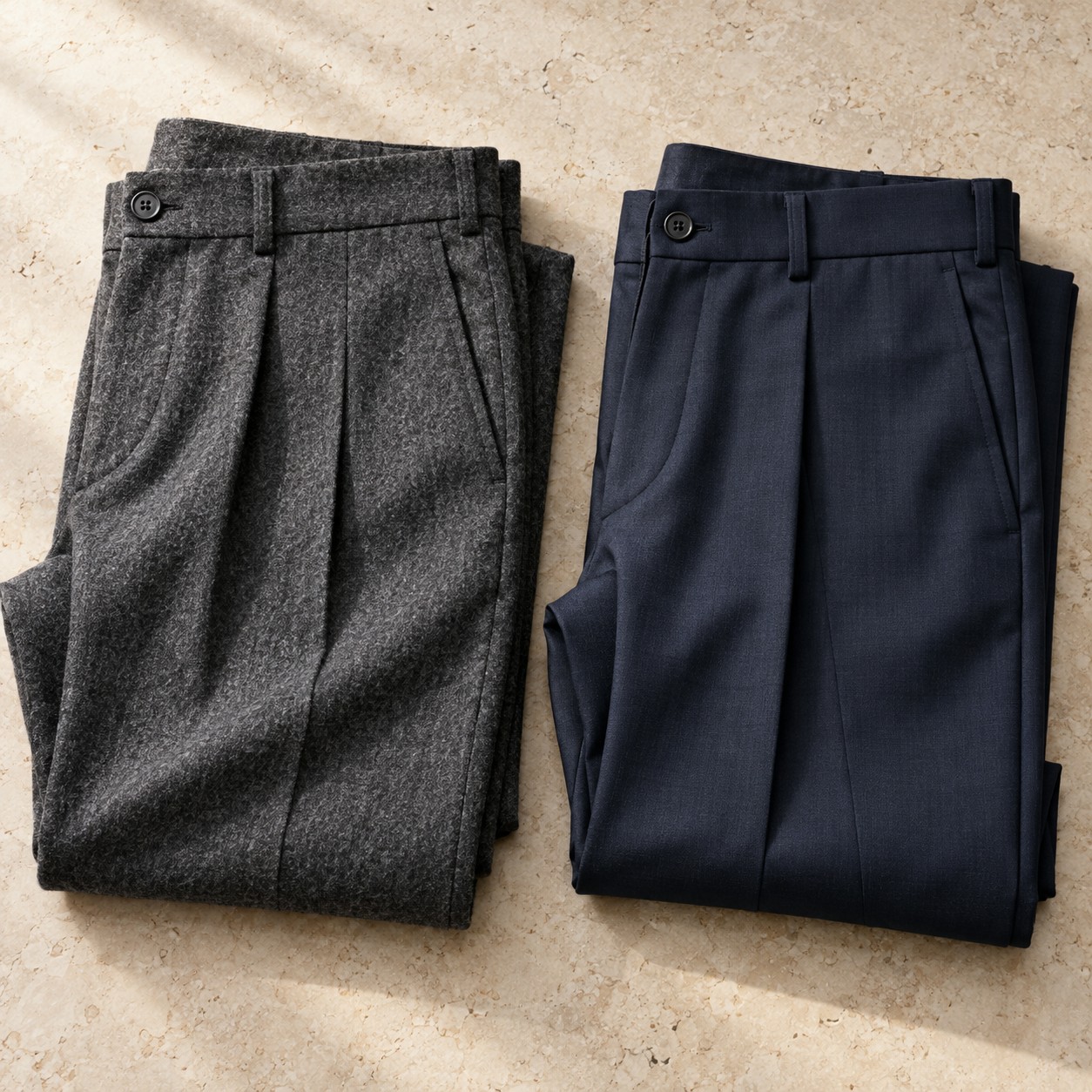
Flannel and worsted are often presented as two alternatives for wool trousers, but the terms describe different aspects of cloth. Flannel refers to a fabric family associated with a soft surface, while worsted relates to yarn preparation and the fabrics made from it. Flannel can itself use worsted yarn. Treat a shop’s comparison as a description of particular fabrics, not a division between two different fibres.
In everyday shopping, the useful contrast is frequently a soft, slightly fuzzy trouser against a smoother, more defined one. Look at the actual surface and ask for clarification when the label is vague. The word wool alone does not settle weight, softness or season.
Consider the line you want
A soft flannel surface can make a trouser feel visually relaxed even when it has a crease. It often sits comfortably beside knitwear, an unstructured jacket or textured shoes. A smoother cloth can produce a more precise outline and may work naturally with a sharper shirt and jacket. These are starting combinations, not dress-code rules.
Try both with the same top and shoes to make the difference visible. Changing the entire outfit at the same time makes it harder to identify what the fabric contributes. A matte flannel with plain trainers may feel coherent, while a glossy smooth trouser can look as if it belongs to a missing suit; the specific finish matters more than the category name.
Pay attention to drape through the knee and hem. A heavier fabric may hold a line differently from a lighter one, but weight does not automatically correct a poor cut. Check the waist, seat and thigh in movement before being persuaded by the surface.
Think about daily contact
A trouser used at a desk spends time against a chair and under repeated bends. Consider whether you like the way the fabric looks after sitting, not only immediately after pressing. Surface texture may make some wear less obvious or more noticeable, depending on the cloth. Do not infer durability from smoothness or fuzziness alone.
Lining can change the feel against the leg, so inspect that separately. Try the trousers with the underwear and socks you normally use rather than assuming fibre content guarantees comfort. If a fabric feels irritating or restrictive during a short try-on, an attractive texture is not a reason to dismiss the sensation.
Make care part of the choice
Read the garment’s care instructions, including pressing and professional cleaning requirements. A wool trouser is not automatically washable at home. Structure, lining and finishing matter alongside fibre content. If you want an easy daily routine, choose one you can realistically maintain.
Ask whether alterations are possible before buying a length or waist that needs work. Keep the original shape in mind: narrowing a softly draping trouser substantially can change its character. The decision is ultimately between complete garments. Choose the surface, weight, fit and care arrangement that suits your day, rather than trying to declare flannel or worsted universally better.