Fit & fabrics
Merino knitwear: weight before warmth claims
The fibre name does not tell you how a particular jumper will behave in your day.
Merino is not a temperature rating
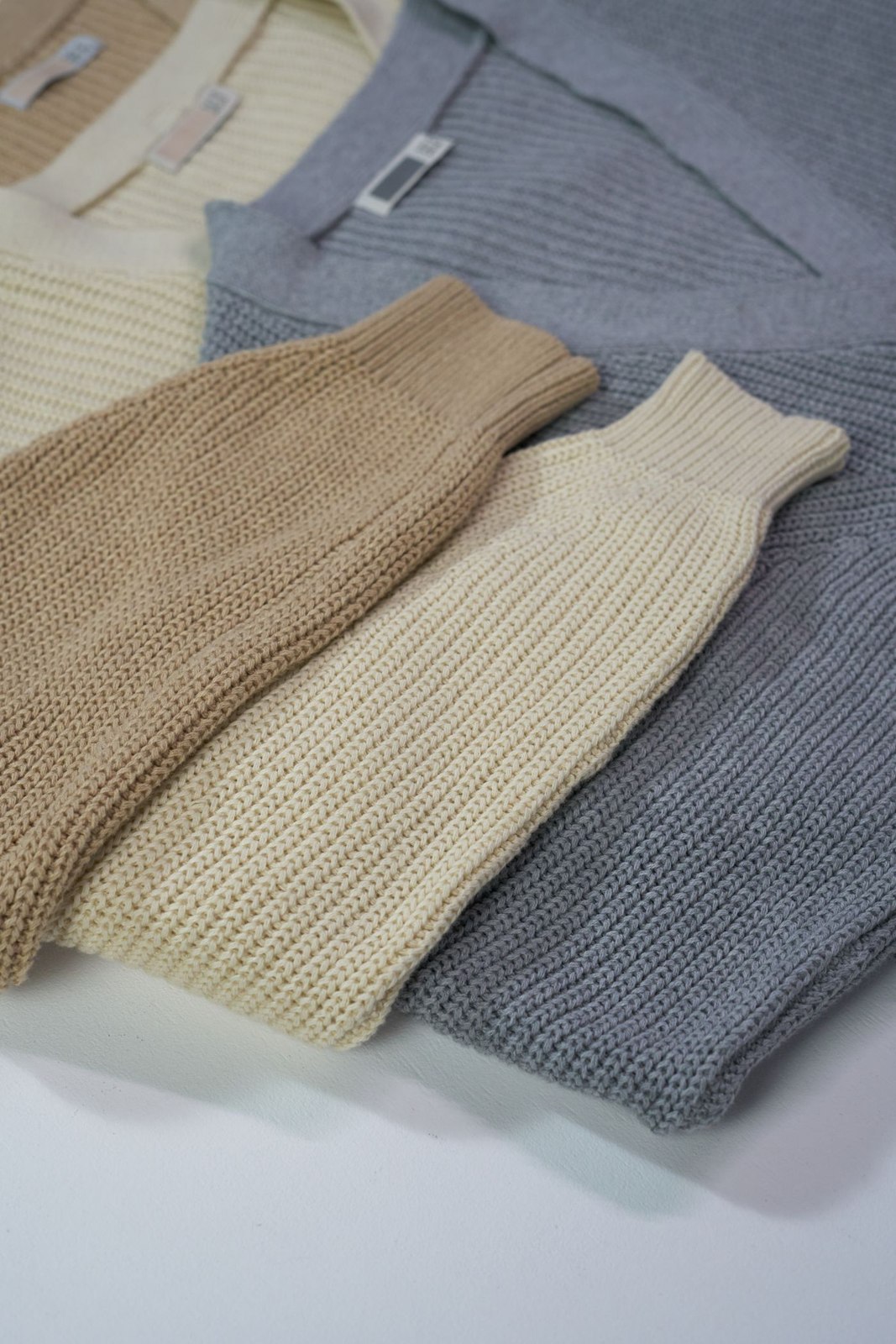
A fine merino crew neck and a thick merino cardigan can both carry the same fibre name while serving different purposes. Construction, thickness, fit and the layers around them all matter. Avoid choosing a jumper from a general promise that a material will keep everyone comfortable in every condition.
Start with the setting. A heated office, a windy walk and a cool train carriage make different demands. Think about how often you move between them and whether an outer layer can be removed. The best choice may be a lighter knit with a coat rather than a single heavy jumper that remains on indoors.
Compare the actual garment
Feel the cloth across a broad area, not only at a thick ribbed cuff. Hold it up to see how open the construction is, without treating light transmission as a precise warmth measurement. Look at whether the knit is intended to sit close to the body or leave space for a shirt. A loose open structure and a dense compact one will not feel identical simply because both are wool.
Try the jumper over the layer you plan to wear. Check shoulders, underarms and neckline for bunching. A thin knit can be useful under a closer jacket, but only if it does not cling in a way you dislike. A heavier knit needs enough room in the coat sleeves and armholes to avoid compressing the whole outfit.
Consider what happens when the coat comes off. If the jumper is too warm for the places where you spend most of the day, its outdoor comfort does not solve the complete problem. A cardigan or zip neckline may offer adjustment, while a fixed high neck can be less flexible for someone who frequently changes environments.
Read composition and care separately
Check whether the garment is all merino or a blend. A blend is not automatically inferior, and a high wool percentage does not establish the quality of knitting, fit or finishing. Inspect seams and ribbing, and try the fabric against skin if that reflects how you will wear it. Personal comfort cannot be guaranteed from a fibre label.
Then read the care instructions. Some wool garments permit machine washing under specified conditions; others do not. Do not apply one wool routine to every item. If flat drying is required, consider whether you have the space. A garment that suits your wardrobe but not your realistic care arrangements may remain unworn.
Make a comparison you can repeat
Use an existing knit as a reference. If it feels too bulky under your coat, compare thickness and sleeve volume directly. If it feels inadequate outdoors, examine the outer layer and wind exposure as well as the jumper. Buying a heavier version is only one possible response.
Choose according to the combination you will actually wear, and avoid assigning a universal comfortable temperature to it. A useful description is specific: light enough beneath a particular jacket, roomy enough over an Oxford shirt, or easy to remove indoors. Those observations help you shop more reliably than an unsupported claim that merino is always warm, cool or seasonless.
Neckline and closures deserve their own test. A fine roll neck may use little material yet feel more enclosing than a heavier open cardigan. Check whether you can remove the knit without disrupting the rest of the outfit when that matters to your routine. Sleeve length and cuff grip also change how easily it sits beneath outerwear. These details can make two garments of similar weight feel quite different, so a scale or fabric specification cannot replace trying the complete combination.