Fit & fabrics
Cotton twill and poplin in everyday shirts
Look beyond weave names to weight, surface, opacity and the job the shirt needs to do.
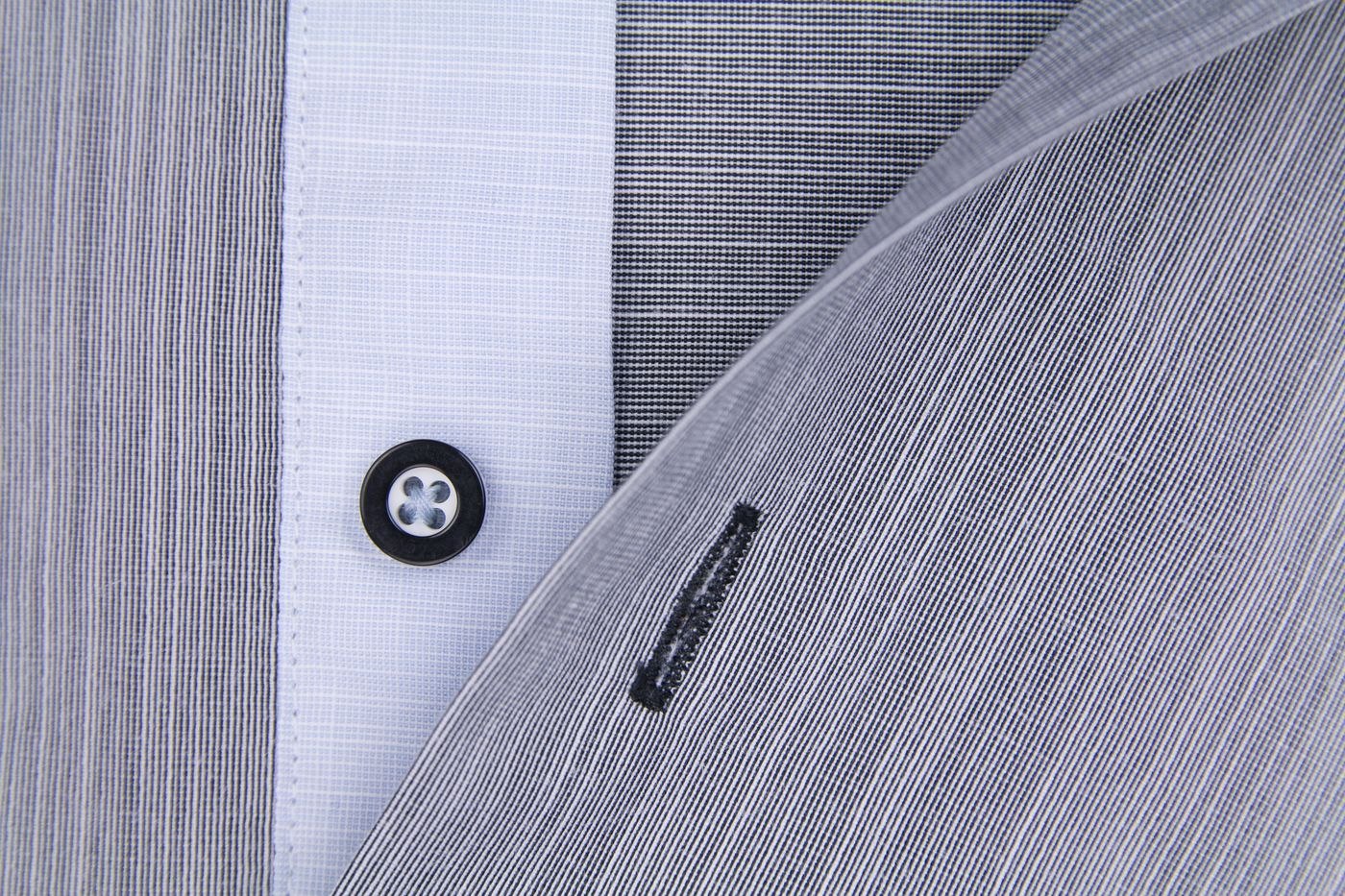
Start with what you can see
Poplin and twill describe woven structures, not two grades of cotton. Poplin typically presents a smooth surface with a simple crossing of yarns. Twill is recognisable by its diagonal texture. These differences can influence appearance and drape, but the name alone does not tell you how heavy, transparent or comfortable a particular shirt will be.
Hold two actual shirts beside each other rather than comparing only catalogue labels. One twill can be fine and supple while another feels substantial. A poplin shirt may be crisp without being especially thick. Yarn choice, fabric density and finishing all help create the result you touch.
Check the task before the texture
For a shirt worn beneath a close jacket, consider how easily the cloth slides under the sleeve and whether it creates bulk at the waist. A smooth, lighter fabric may be convenient, but very thin white cloth can reveal an undershirt or waistband more than you want. Try it in daylight and against the layers you use.
For a shirt worn alone, surface texture may be more noticeable. A subtle diagonal can add interest to a plain colour, while a quiet smooth surface can make a patterned tie or textured jacket stand out. Neither weave automatically belongs only to office or casual clothing; collar, cuffs, cut and finishing contribute to that impression.
Compare movement too. Raise your arms, sit and reach forward. A shirt that feels substantial on a hanger may be stiff around the elbows, while a softer one may settle more easily. Conversely, a crisp cloth may give the clean outline you prefer. The useful comparison is between complete shirts, not isolated fabric adjectives.
Test opacity and creasing honestly
Look at pale shirts under ordinary light from the front and side. Stretching fabric across the chest can make it more transparent, so check both material and fit. A thicker shirt is not automatically the answer if it becomes uncomfortable under your usual layers. Trying a less contrasting undershirt may change the result without changing the shirt.
Crease resistance also varies with the specific fabric and finish. Do not assume that every twill can skip ironing or every poplin must look crumpled after sitting. If the retailer describes a treatment, read the care information and decide whether it suits your routine. The weave name does not replace the garment’s washing, drying or pressing instructions.
Choose one reference shirt
If you are unsure, compare new options against a shirt you already enjoy wearing. Note what matters about it: smoothness, coverage, weight under a jacket or the way the front hangs untucked. Those observations are more transferable than trying to memorise a universal ranking of fabrics.
Buy for the routine you have. A shirt that looks excellent only after a level of pressing you will not maintain may be less useful than a slightly more textured alternative. On the other hand, choosing all shirts solely to avoid care can rule out a fabric whose appearance you genuinely prefer. Treat poplin and twill as starting descriptions, then let the actual garment, fit and intended use decide.
For a useful home comparison, place the two shirts on similar hangers and look at the side seams, placket and lower edge. Then put each on rather than relying on how neatly it hangs. Check how the cuff feels when fastened and whether the fabric bunches beneath a watch or jacket sleeve. These are small details, but they determine whether a shirt becomes part of a routine rather than a garment admired in the wardrobe.
If ordering online, seek a close photograph of the cloth and a clear description of the actual product. Do not substitute reviews of another shirt from the same brand, especially when the weave or finish differs. Keep the first purchase limited until you understand the fit and care. A successful test of one shirt provides a better basis for adding colours than a general claim that one weave always suits you.