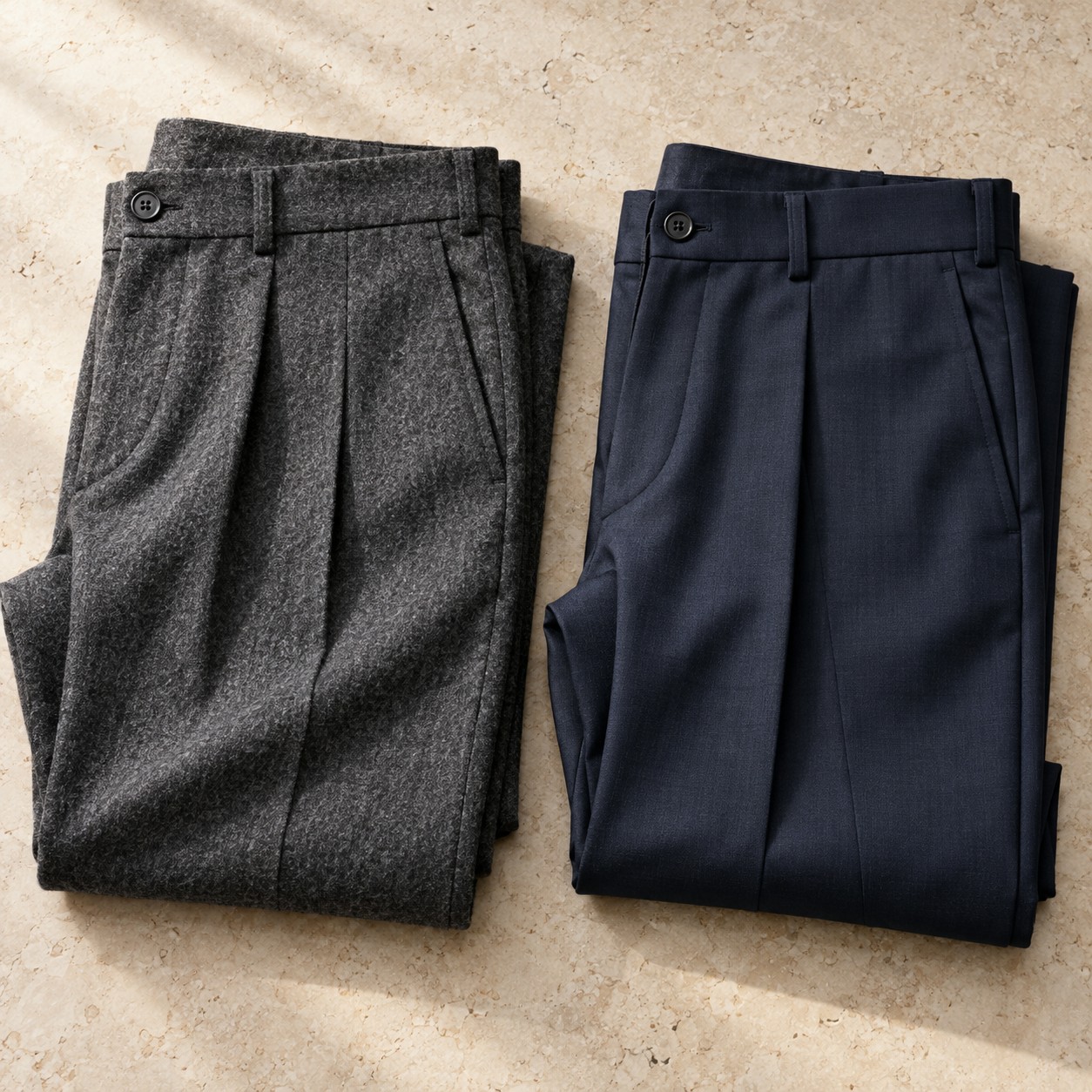
Fit & fabrics
Buying second-hand trousers with enough information
A labelled waist size is a starting point; current measurements and condition complete the decision.
Ask about the trousers as they are now
A second-hand pair may have been shortened, taken in or changed through wear and washing. The original size label does not necessarily describe its current dimensions. Ask whether alterations are known, and request measurements rather than relying only on a seller’s statement that it fits true to size.
For a useful comparison, obtain waist, front rise, inside leg and leg opening, with thigh or seat measurements when those are important to you. Clarify the measuring method and units. A flat waistband width and a circumference are different numbers; a photograph with the tape in place can resolve ambiguity better than another size label.
Compare with a similar pair
Use trousers you already like as a reference, measuring them the same way. A low-rise jean is not an ideal guide to a higher-rise tailored trouser because the waistband sits on a different part of the body. Compare the intended shape as well as the raw dimensions.
Consider the fabric. A close fit that works in stretchy cloth may not provide the movement you need in rigid fabric. Do not assume the used pair will stretch or shrink into place. If an alteration would be necessary, ask a tailor about feasibility before treating a low purchase price as a bargain.
Check whether a planned alteration is available
A listing can look promising because the trousers are only slightly long. Ask for a photograph inside the hem if future lengthening matters, or discuss shortening with a tailor if there are turn-ups, zips or other details. The visible length alone does not show how much usable cloth remains. Similarly, a generous waist does not prove that reducing it will leave the pockets and seat well placed.
Add the likely alteration and cleaning work to the decision before comparing prices. A cheap pair requiring uncertain reconstruction is not equivalent to a more expensive pair already close to your fit. If the seller cannot provide enough information, it is reasonable to pass rather than turn the purchase into a repair experiment.
For a set of measurements that almost matches your reference, identify the specific difference. A shorter rise may matter more than a slightly wider hem; a smaller thigh may be more limiting than extra leg length. Rank those differences by your own fit needs. This is especially helpful when the listing offers no return, because optimism about one easy-looking adjustment can distract from a less visible problem elsewhere.
Look for wear where it matters
Request clear images of the seat, crotch seams, pockets, hems and closure. Check for thinning, repairs, stains and uneven fading, not just obvious holes. These details do not make every pair unsuitable, but they should be part of the decision and description.
Read the care label if visible and confirm any missing information with the seller. Understand the return arrangements before buying, particularly when fit cannot be tested in person. On arrival, inspect and try the trousers carefully before altering them or removing any seller tags. Clean them appropriately before regular use. A well-informed second-hand purchase is not about avoiding every sign of wear; it is about knowing the fit, condition and work involved before the pair becomes yours.
Use an example to decide whether to proceed
Consider a pair whose waist and thigh match your reference, but whose inside leg is longer. With a simple hem and suitable construction, shortening may be a reasonable option after a tailor's assessment. Now consider another pair with the perfect leg length but a much shorter rise and tighter seat. The second pair is not the easier purchase just because no hem work appears necessary.
Write down the unresolved question before contacting the seller. Ask for the missing measurement, a close photograph of the worn area or confirmation of a known alteration. One specific question is easier to answer accurately than a request to describe the fit generally. If the answer remains unclear, let the uncertainty remain visible in your decision rather than silently replacing it with the most optimistic possibility.