Care & storage
When to repair a zip and when to ask for help
A trapped lining is different from missing teeth. Diagnose before applying force.
Stop at the first resistance
When a zip suddenly stops moving, pulling harder is an understandable response and often the wrong one. Put the garment down so you can see both sides of the fastening. Check whether lining, a loose thread or the outer fabric has entered the slider. Remove tension from the garment instead of stretching the opening wider.
YKK advises gently reversing a slider while freeing caught material, rather than forcing it through. Work slowly and stop if the cloth remains firmly trapped. A small jam can become torn fabric when the slider is treated like a lever. If you cannot see the cause, better light and a second pair of hands may be more useful than a tool.
Look for damage, not only obstruction
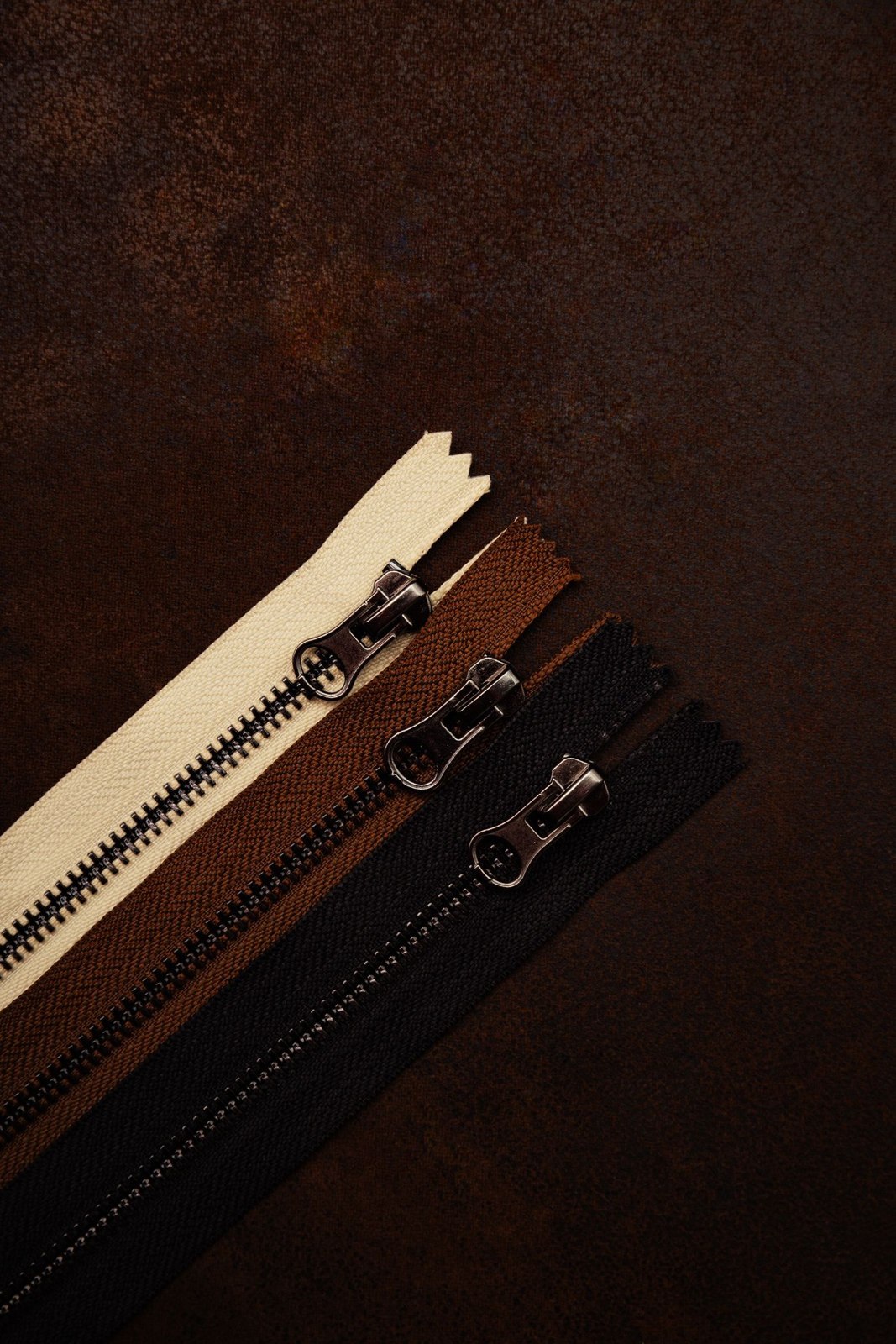
A zip that closes then separates may have a different problem from one blocked by a thread. Examine the teeth or coil, the tape and the top and bottom stops. Missing or distorted elements, torn tape and damaged separating parts usually need a more considered repair. Do not assume every fault can be corrected by squeezing the slider with pliers.
Replacement parts must match the fastening. Similar-looking sliders can have different dimensions and mechanisms. A cobbler, alteration service or the garment manufacturer may be able to assess whether the slider alone can be replaced or the whole zip needs changing. On lined clothing, replacement also involves the surrounding construction.
Describe the failure before requesting a repair
A useful repair request says when the failure occurs. Does the slider stop at the same point, move without closing the teeth, or close correctly until the garment is under tension? Does the pull tab break while the slider remains otherwise functional? These observations help distinguish several jobs that are often grouped together as a broken zip.
Take a clear photograph of the fastening, including both ends and the surrounding fabric. If a small part has detached, keep it in a separate labelled container rather than leaving it loose in a pocket. Do not dismantle the remaining fastening to provide a better photograph. A repairer usually benefits from seeing how the original components are arranged.
When the garment is worth repairing to you, ask about matching the length, colour and function, not only obtaining any zip that closes. A two-way coat zip or a special separating end has a purpose. Substituting another type may change how the garment is used. Agree on that change before the work begins rather than discovering it when collecting the item.
Avoid an improvised chemical fix
Household oils can mark the fabric, and a lubricant suitable for one technical zip may not suit another. Use only a product recommended for the particular fastening and garment. If the zip belongs to waterproof or specialist clothing, preserve its intended function by following the maker’s guidance.
For prevention, avoid overfilling pockets so the closure is constantly under tension. Fasten a trouser’s top button or hook before pulling the zip where the design calls for it. Follow garment instructions for laundering and protect the fastening accordingly. Keep a damaged garment out of the ready-to-wear section until repaired; discovering the same unreliable zip while rushing out does not make it easier to fix.