Care & storage
Folding knitwear instead of hanging it
Support the whole garment and make the shelf easy to use.
Notice where the weight goes
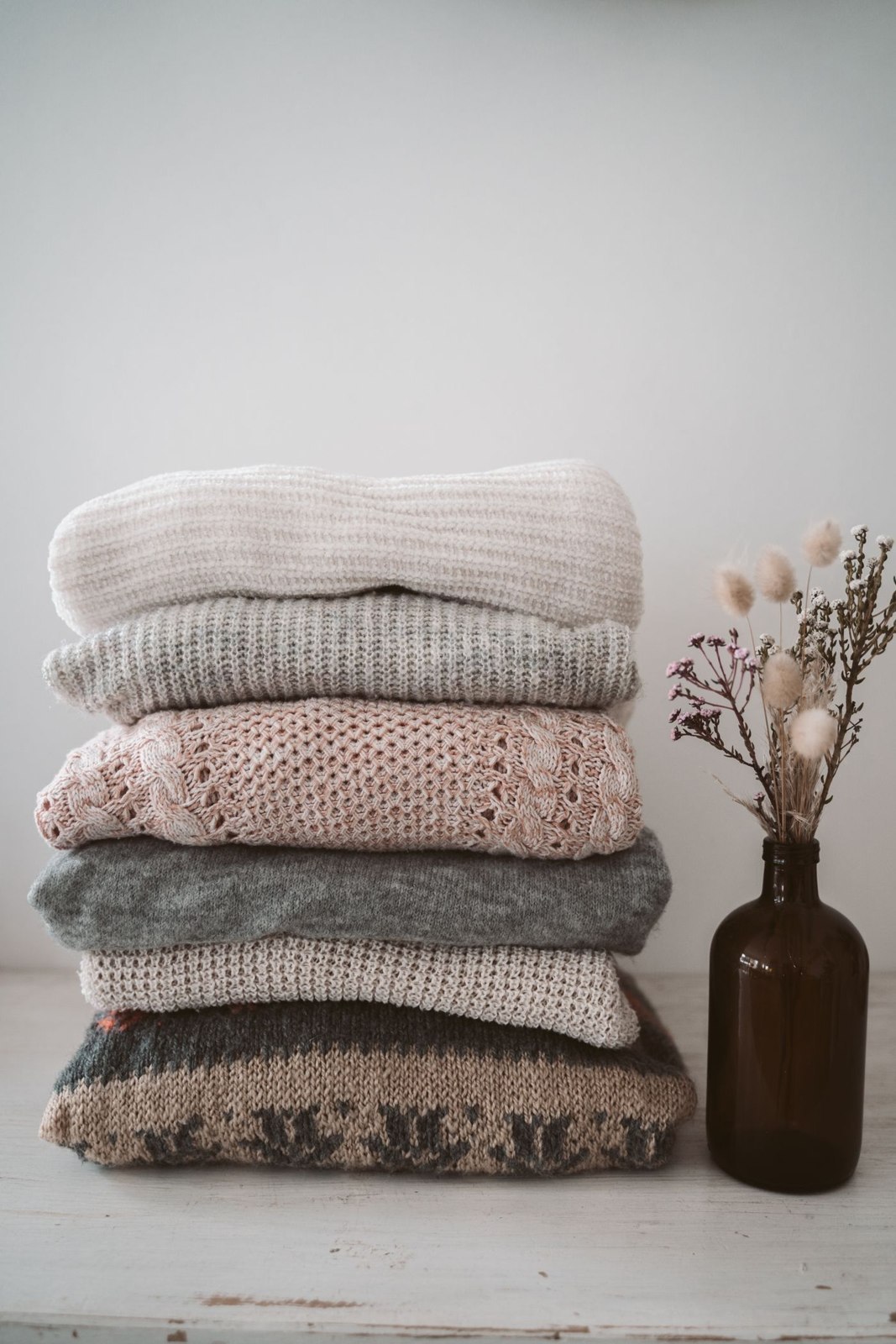
A jumper on a hanger puts much of its weight through the shoulders. Depending on the knit, its weight and how long it remains there, that support can leave points or change the outline. Folding spreads the garment across a shelf or drawer instead. It is especially worth considering for heavier or loosely knitted pieces that seem to lengthen while hanging.
Start with a clean, fully dry garment. Folding a damp jumper into a neat rectangle does not finish the drying process. If it has just been washed, follow the drying instruction first and only put it away after checking the thicker ribbing and underarm areas.
Use the garment's shape
Lay the jumper on a clean surface and smooth it lightly. Bring each sleeve inward without pulling at the shoulder seam. Fold the body only as much as the drawer or shelf requires. A thick cable knit may sit better in a broad, shallow fold than in a small, tightly compressed parcel.
Do not force every jumper into exactly the same dimensions. A roll neck, zip collar or chunky cardigan needs space for its thicker details. Place hard buttons or a zip pull so they are not pressing against a delicate neighbouring knit. If the garment has decorative loops or open stitches, keep it away from catches and rough shelf edges.
Distinguish a daily shelf from seasonal storage
A jumper used twice a week needs easy access and space to be returned neatly. A knit put away for several months needs a more deliberate condition check. Do not simply move the entire daily stack into a box without examining it. A forgotten stain becomes harder to notice once the garment is folded with the affected area inside.
For daily storage, test whether the drawer closes without pressing a hard ridge into the knit. If the stack brushes the drawer above, reduce its height or change the fold. For longer storage, choose a clean location and an appropriate container or cover, then inspect periodically. The container should not conceal an existing moisture problem.
Keep decorative or easily snagged pieces away from zips and hook-and-loop fastenings. If storing different types together, arrange them so rough details cannot rub the soft surface when something is removed. This is a reason to leave a little usable space, not to pack every available centimetre. A system that requires tugging one jumper out from beneath several others defeats the careful folding that came before it.
Build a stack you can actually use
A tall pile looks organised until the lowest jumper is needed. Keep stacks low enough that you can lift the pieces above without dragging the chosen one out. Alternatively, arrange folded knits upright in a drawer if their structure allows it and the drawer does not squeeze them together.
Give frequently worn pieces the easiest position. Before returning a jumper after wear, inspect it and let it air where appropriate; do not hide a damp cuff or food mark inside the stack. For seasonal storage, clean according to its label and check the storage area periodically for moisture or insects. Folding protects the shape, but it is not a substitute for those checks. If a garment has already stretched, avoid trying to shrink it back with an improvised hot wash. Ask the maker or a suitable cleaner what recovery, if any, is realistic.