Care & storage
Removing lint from dark clothing
Identify what is sitting on the surface before choosing a tool.
Loose fibres or part of the cloth?
A dark coat can show every pale fibre from a scarf, but not every fuzzy area is loose lint. Pills are attached clusters, while a brushed cloth may have an intentionally soft surface. Examine a small section under good light before trying to make the entire garment perfectly smooth. Removing the fabric’s own texture is not cleaning.
Think about where the lint came from. A shedding scarf, towel in the same wash or rough storage cover can keep adding fibres. Removing the source may save more effort than repeating a vigorous cleaning routine each morning. Separate incompatible laundry according to care needs rather than using a roller to solve the consequences indefinitely.
Choose a gentle method
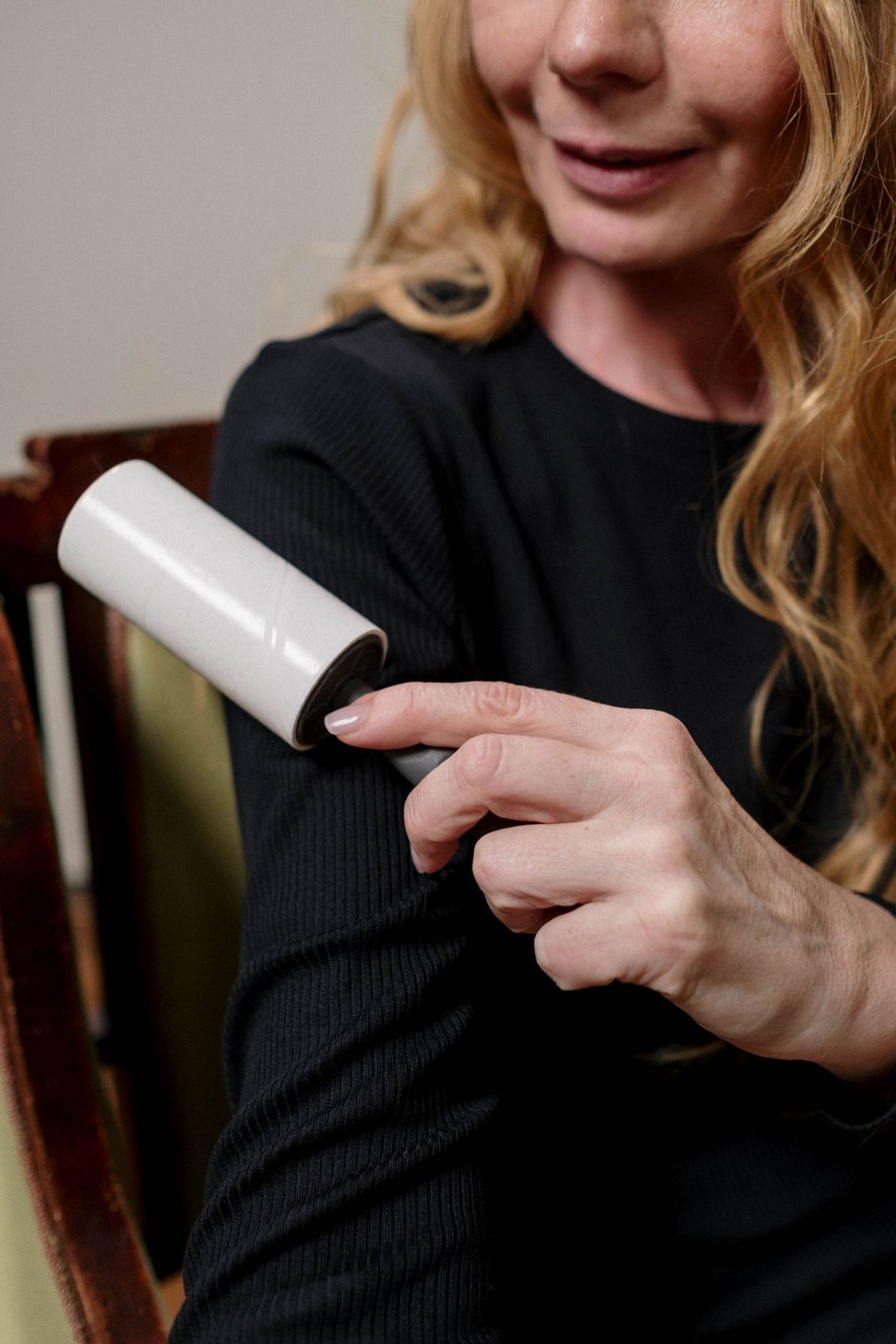
For a suitable woven garment, a clean soft garment brush can lift surface debris. Support the fabric on a stable surface and work with light strokes. Do not use the same brush that cleans dusty footwear. A lint roller may suit some clothing, but test it discreetly first, especially on delicate, loosely knitted or textured surfaces.
Replace a used adhesive sheet rather than pressing harder when it stops collecting fibres. Keep the tool away from fragile trim. If threads start lifting with the lint, stop immediately. Ordinary sticky tape is not automatically a safe substitute: adhesives and removal force vary, and a strip wrapped tightly around a hand encourages excessive pressure.
Know when to leave the surface alone
If the remaining specks are firmly attached pills, use a method appropriate to that garment rather than pulling them off repeatedly. A fabric shaver also removes material and is not a universal finishing tool. Loose knits, embroidery and raised seams need particular caution; ask the maker when uncertain.
Check the garment from a normal viewing distance after one gentle pass. A dark textile need not look like a digitally edited product image. Put it on a clean hanger or shelf, away from the item that shed onto it. For the next wash, inspect pockets for tissues and follow sorting and care instructions. These small preventative checks often matter more than finding a stronger device for the same recurring problem.