Care & storage
Managing pilling on a knit
Treat the surface carefully and investigate the friction that keeps returning.
A pill is not simply dirt
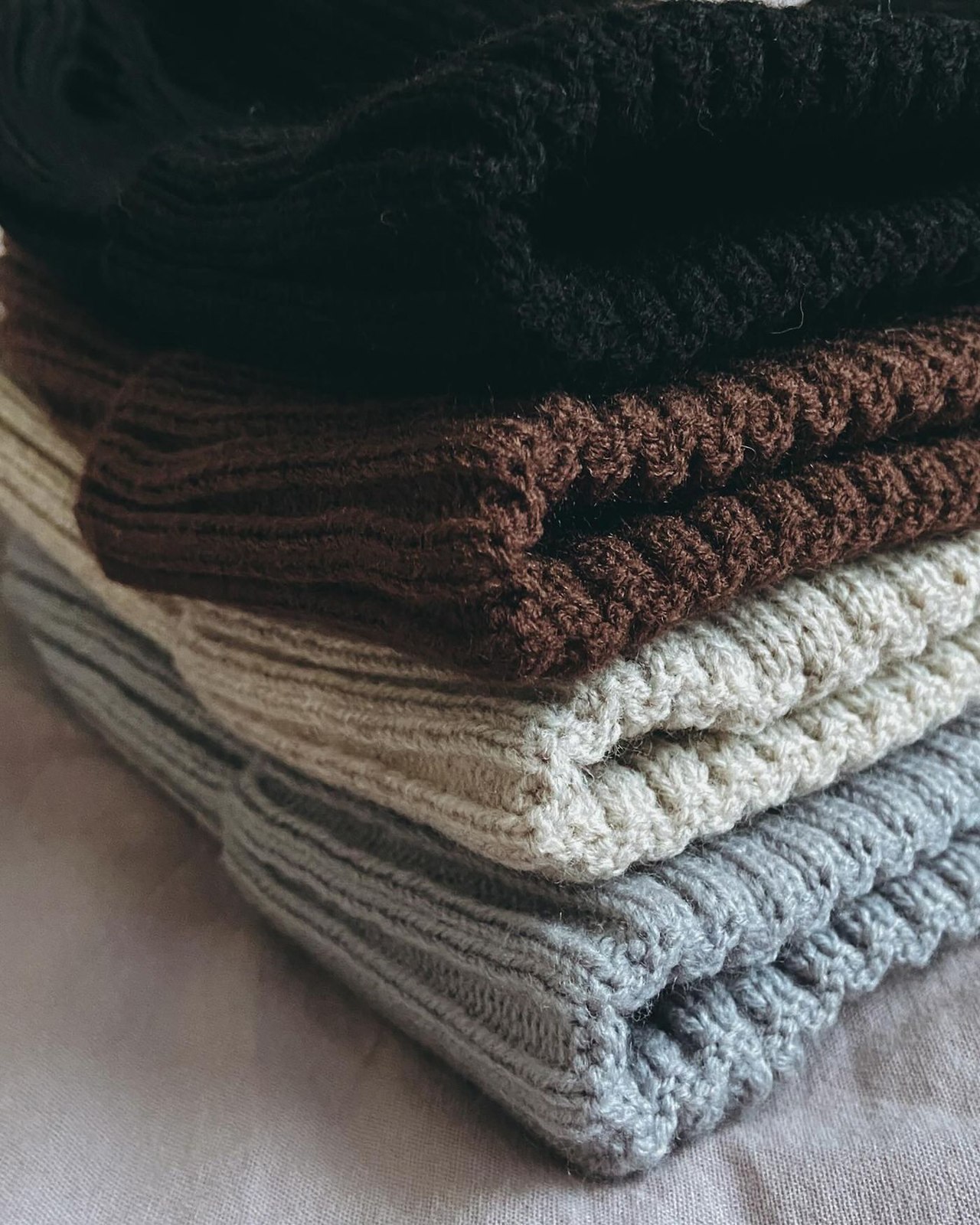
Pilling creates small attached clusters on a knit’s surface. It often appears where the garment rubs against itself, a desk or another item of clothing. Before reaching for a tool, identify whether you are looking at pills, loose lint or the intended halo of a fuzzy yarn. Those surfaces should not all be treated in the same way.
Woolmark describes abrasion as a contributor and notes that several factors affect pilling. A few bobbles therefore do not, on their own, establish that a jumper is badly made. Equally, repeated severe pilling is a reasonable issue to discuss with the seller. Photograph the area before an aggressive treatment makes the original condition impossible to judge.
Prepare a small test
Read the maker’s advice and choose a method suited to the knit. Lay the dry garment flat in good light. Smooth it without stretching and check for loose loops, holes, embroidery and raised seams. These are places where a comb or shaver can catch rather than travel evenly across the surface.
Test a discreet area first. With a suitable comb, use light, controlled movements rather than dragging it through the knit like a hairbrush. With a fabric shaver, follow its instructions and keep the cloth supported. Do not push harder to make one stubborn pill disappear. The device cannot reliably distinguish every protruding fibre from a stitch that belongs in the garment.
Pause after a short pass and inspect the result. A successful test should reduce the visible pills without leaving a thin or unusually smooth patch. If the fabric becomes fuzzy, catches or changes texture markedly, stop. Delicate openwork and long fuzzy yarns may be better left to the manufacturer’s advice or a textile repair specialist.
Reduce the repeated contact
Look at the pattern of wear. Bobbling beneath a shoulder strap suggests a different source from a band across the forearms where they rest on a desk. You need not redesign your life around a jumper, but moving a rough bag strap, checking a jacket lining or choosing a different layer for a demanding day can reduce a specific source of rubbing.
Care also matters. Follow the label, including washing and drying instructions, and avoid mixing the knit with abrasive items merely because their colours match. Do not assume that softener solves pilling; Woolmark advises against it for wool. A product that makes cloth feel different is not necessarily preventing the mechanism that creates the pills.
Choose a realistic stopping point
Work on the visible areas that bother you, then view the jumper at ordinary distance. Repeatedly shaving an entire garment to pursue a perfectly new surface removes more material over time. Small signs of wear may be a better compromise than a thinning panel.
If there is also a hole or broken yarn, that is a separate repair, not another pill to remove. Mark its position and ask for appropriate mending. Store the jumper without rough objects rubbing against it, and reassess after the next wear. The goal is a garment you can continue using comfortably, not a promise that the surface will never bobble again.