Shoes & accessories
Derby shoes for less formal outfits
Look beyond the shoe's name to its shape, sole and finish.
Not every Derby has the same mood
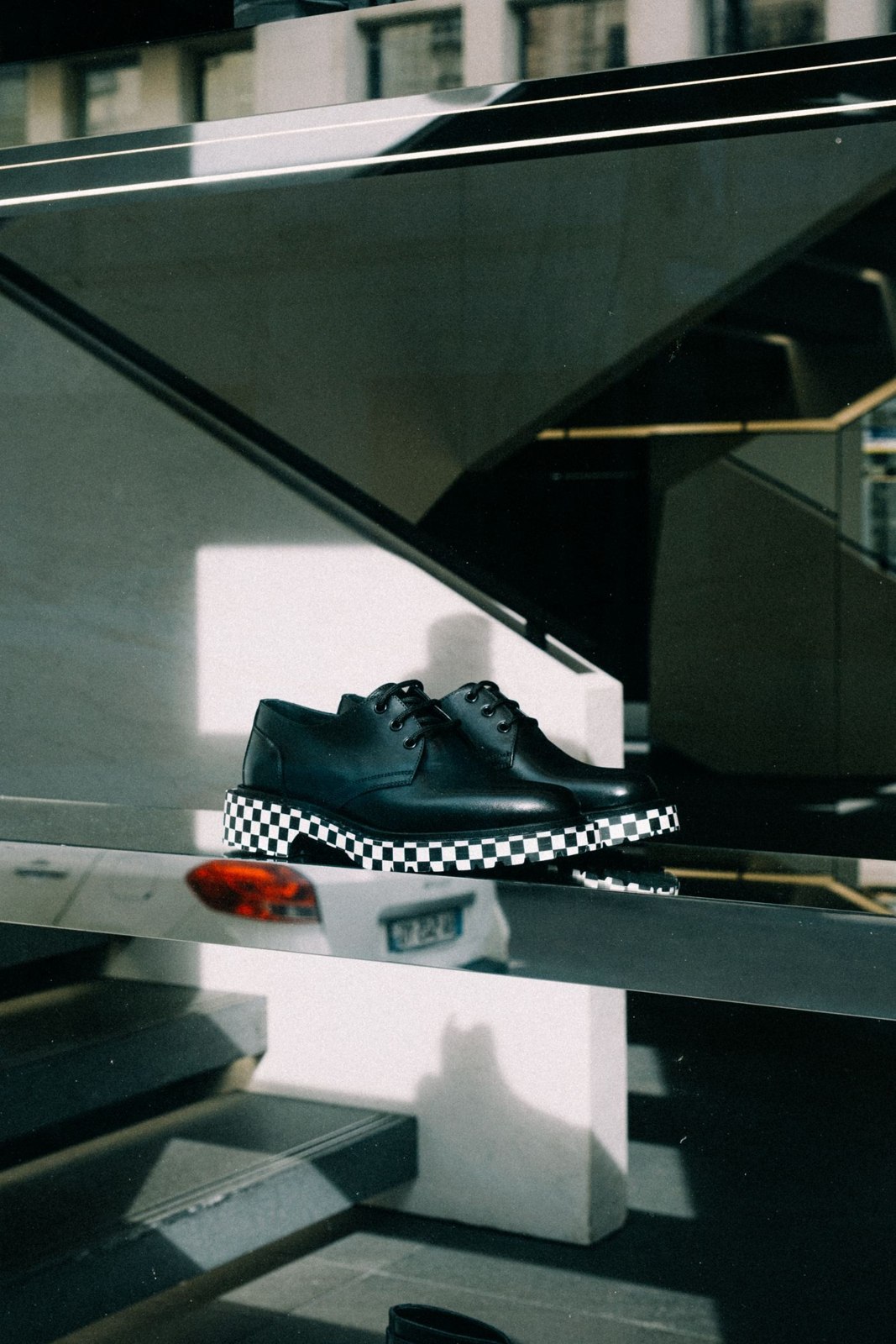
The visible lacing arrangement helps distinguish a Derby, but it does not decide how formal the entire shoe feels. A sleek black pair with a thin sole reads differently from a rounded brown pair on a substantial rubber sole. Before matching trousers, look at those proportions. You may already own the right kind of shoe without needing a new category in your wardrobe.
For an everyday outfit, a slightly fuller shape can sit comfortably beneath straight jeans or chinos. Extremely narrow trousers sometimes exaggerate the size of a broad shoe. If the combination feels bottom-heavy, try a trouser with more width rather than immediately rejecting the footwear. Balance is easier to judge in a full-length view than by looking down at your feet.
Use ordinary clothes around it
A knitted crew neck and cotton trousers allow the leather to become one texture among several. A casual shirt worn without a tie can do the same. There is no need to add a blazer simply because the shoes have laces and polished uppers. That extra layer is useful when the occasion or weather calls for it, not as an apology for the footwear.
Brown leather can soften the contrast with blue denim, while black gives a more defined edge. Neither choice needs an exact matching belt. Keeping the overall depth of the colours similar is often enough. If the shoes are the darkest item, repeat darkness elsewhere only when the outfit looks better to you, rather than following an automatic accessory rule.
Check what the sole changes
A thicker sole affects the trouser break and can change how stable the shoe feels underfoot. Try the pair on the surfaces you are permitted to use before purchase. Appearance alone cannot tell you whether a sole will be comfortable for your particular walking day. Avoid treating a rugged-looking tread as a guarantee of performance in every wet condition.
Laces should allow the shoe to hold the foot without creating pressure across the top. If you must pull them unusually tight or leave them almost open to tolerate the fit, another width or model may be worth trying. Do not buy on the assumption that leather will expand in exactly the direction you need.
Finish with socks that suit both the temperature and the available room inside the shoe. A fine pair may work under a tailored trouser; a heavier pair can complement denim. The best choice is the one that remains comfortable after walking and sitting, not merely the one that completes a colour scheme.