Care & storage
Brushing a suede shoe before treating a mark
Separate loose dirt from a stain, and resist the urge to scrub the whole surface.
First decide what you are seeing
A dark patch on suede is not always a stain. The nap can lie in a different direction after contact with a trouser hem or another shoe. Look at the area from more than one angle before choosing a treatment. Loose dust, dried mud and an absorbed oily mark are different problems, even if they initially appear similar.
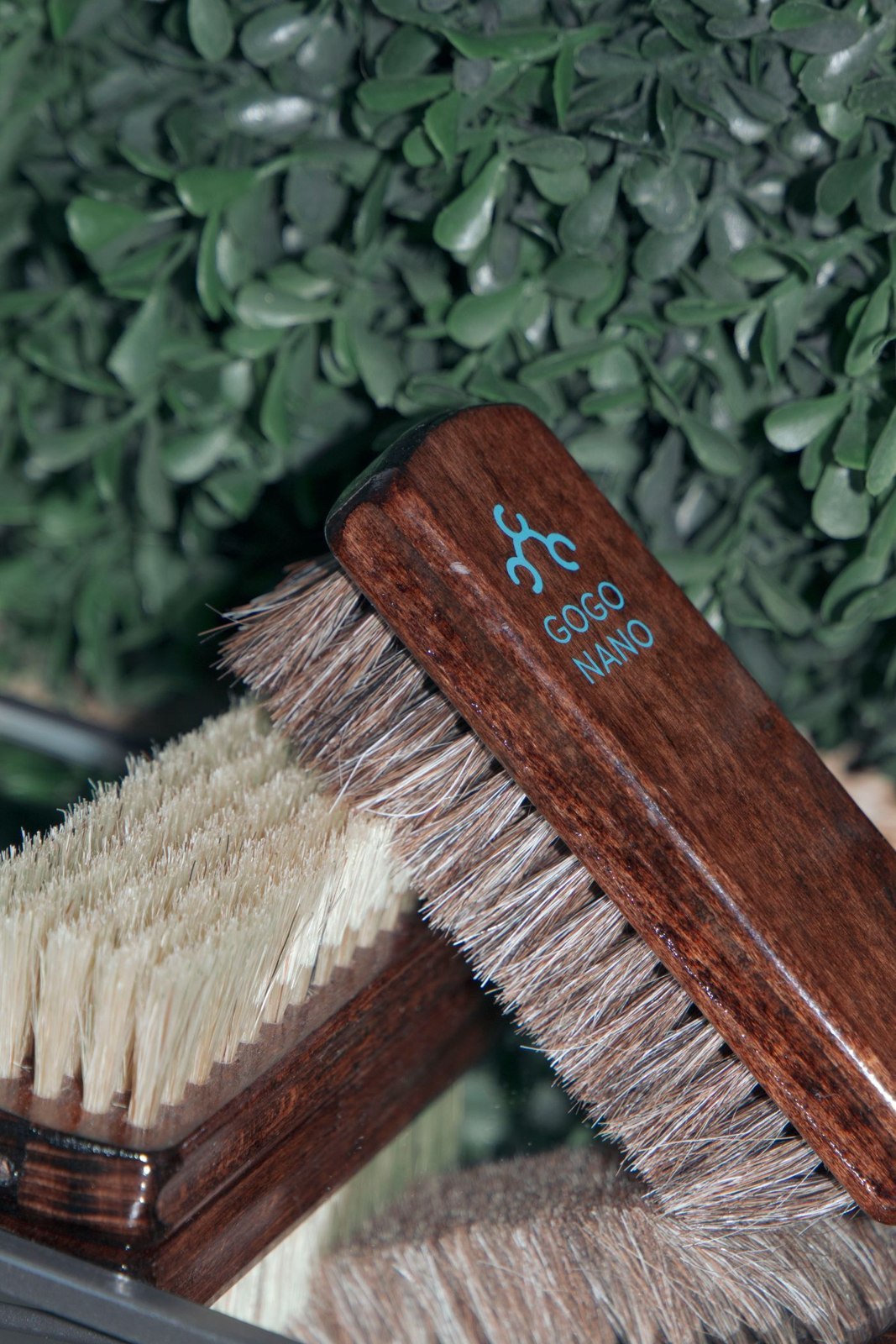
Let a wet shoe dry naturally before attempting ordinary dry brushing, unless its maker gives a specific alternative instruction. Keep it away from direct heat. While waiting, check the care guidance and find a brush intended for the material rather than borrowing a stiff household brush.
Use a light hand
Work gently on a small area, following the maker’s directions for the brush. Remove loose dry dirt without repeatedly attacking one point. Pause and look at the surface in consistent light. A change in nap direction can alter its appearance, so immediate darkening does not necessarily mean more dirt needs to be removed.
Keep the brush clean. A tool previously used with dark polish can transfer colour to a pale suede shoe. Be careful around stitching, perforations and the edge of the sole, where force is concentrated. If fibres begin to look rougher or the surface becomes uneven, stop rather than increasing pressure.
A remaining mark needs a different decision
Only consider an eraser or cleaner if it is compatible with the particular suede and the maker permits it. Test discreetly and allow the test to dry fully before treating a visible section. Do not assume that smooth-leather cream is an interchangeable solution; it can change the texture you wanted to preserve.
Oil, dye transfer and an old unidentified stain may need a cobbler or specialist cleaner. Explain what caused the mark if you know, and disclose any product already applied. There is no need to add vinegar, soap and water in succession while hoping one will work. Several treatments can make the original problem harder to identify.
When the shoe is dry and assessed, store it so another shoe is not rubbing against the same area. A protector is an optional, material-specific treatment rather than a promise of waterproofing. Follow its instructions, including ventilation and patch testing, instead of spraying before every outing by habit.