Shoes & accessories
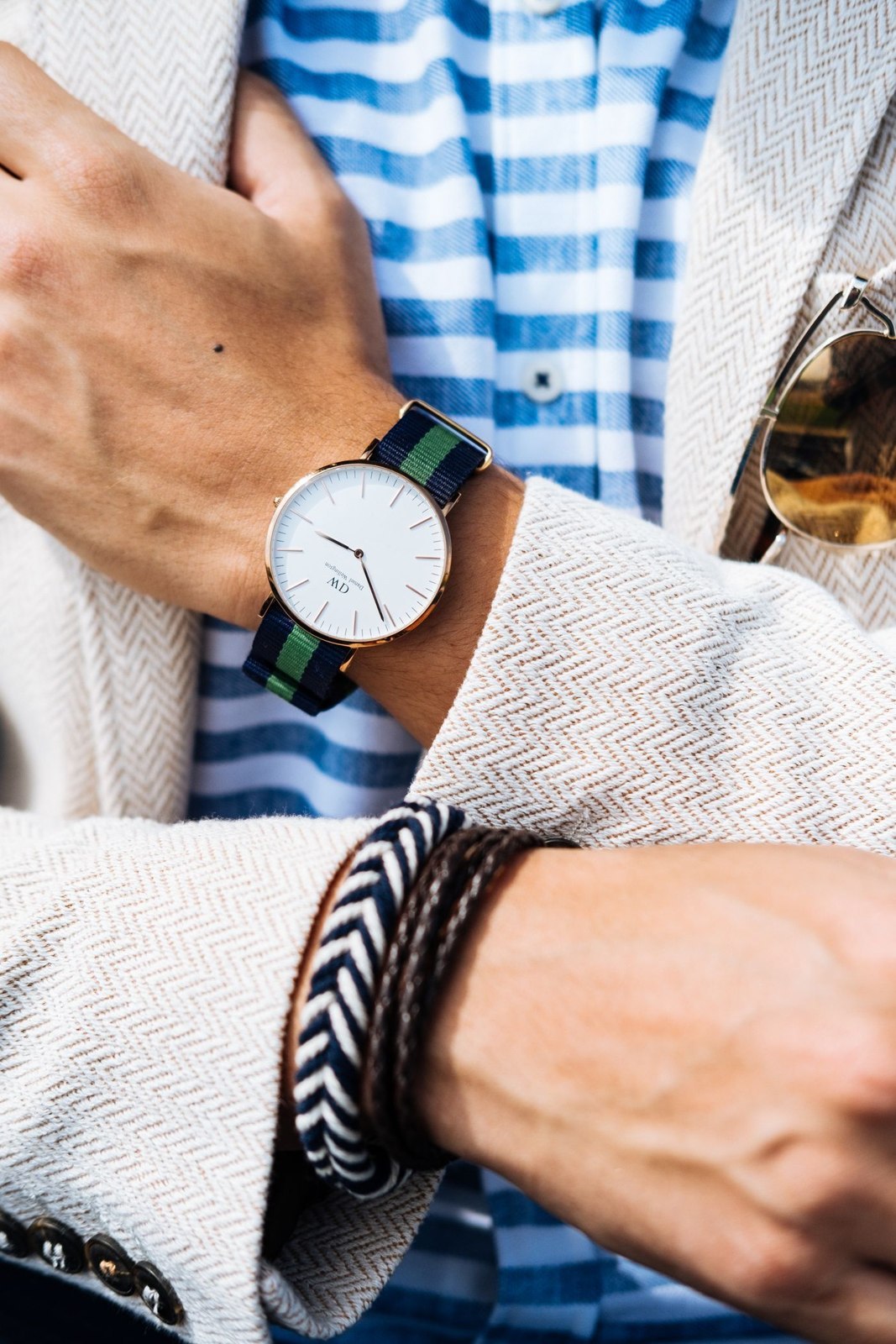
Bracelets alongside a watch
Leave enough room for both pieces to move without becoming a constant distraction.
Decide whether they belong on the same wrist
A bracelet does not have to sit beside the watch. Wearing it on the other wrist can keep both objects visible and reduce contact between them. Try that arrangement before assuming a stack is the intended result. The choice depends on the shapes, your sleeves and how you use your hands through the day, not on a requirement to display everything together.
If you prefer the same wrist, start with one bracelet. Watch what happens when you rest your hand on a desk or reach into a pocket. A piece that repeatedly slips beneath the watch case may feel awkward. A loose bracelet can also strike the case or clasp, so consider whether the materials and finishes tolerate that contact.
Make space for sleeves
A shirt cuff needs room around the entire arrangement. If it only closes with pressure, adding another bracelet is unlikely to improve matters. A thick knit sleeve may catch on projecting details. Test the clothes you wear regularly rather than judging the accessories with bare arms alone. Comfort during ordinary movement is a useful limit on how much to add.
Choose a relationship, not a perfect match
Metal, cord, beads and leather each introduce a different texture. One quiet bracelet can relate to a watch without repeating its finish exactly. Mixed metals are a visual choice, not a technical mistake. Look at how much attention the combination attracts beside your clothes. If both objects are large and detailed, you may prefer to let one take the leading role.
Avoid buying a bracelet simply to fill an assumed gap. A watch can be worn alone, and a bracelet can be worn without a watch. Try the pieces separately with several outfits. This reveals whether you enjoy each item or only the idea of a complete accessory set seen in a photograph.
Daily use is the final test
Fastenings should be manageable without pulling or forcing. Check that the bracelet can be removed when your activity requires it. Follow workplace and equipment safety rules; decorative accessories are not suitable around every tool or moving mechanism. An outfit decision should never override a clear requirement to remove jewellery for a task.
Keep care instructions for the individual materials in mind. Do not assume that a bracelet can tolerate water because the watch beside it can, or that one cleaning product suits both. Store the pieces so that hard edges do not unnecessarily rub against each other. A small amount of attention can make wearing them feel simpler rather than more demanding.