Shoes & accessories
A backpack that works with an overcoat
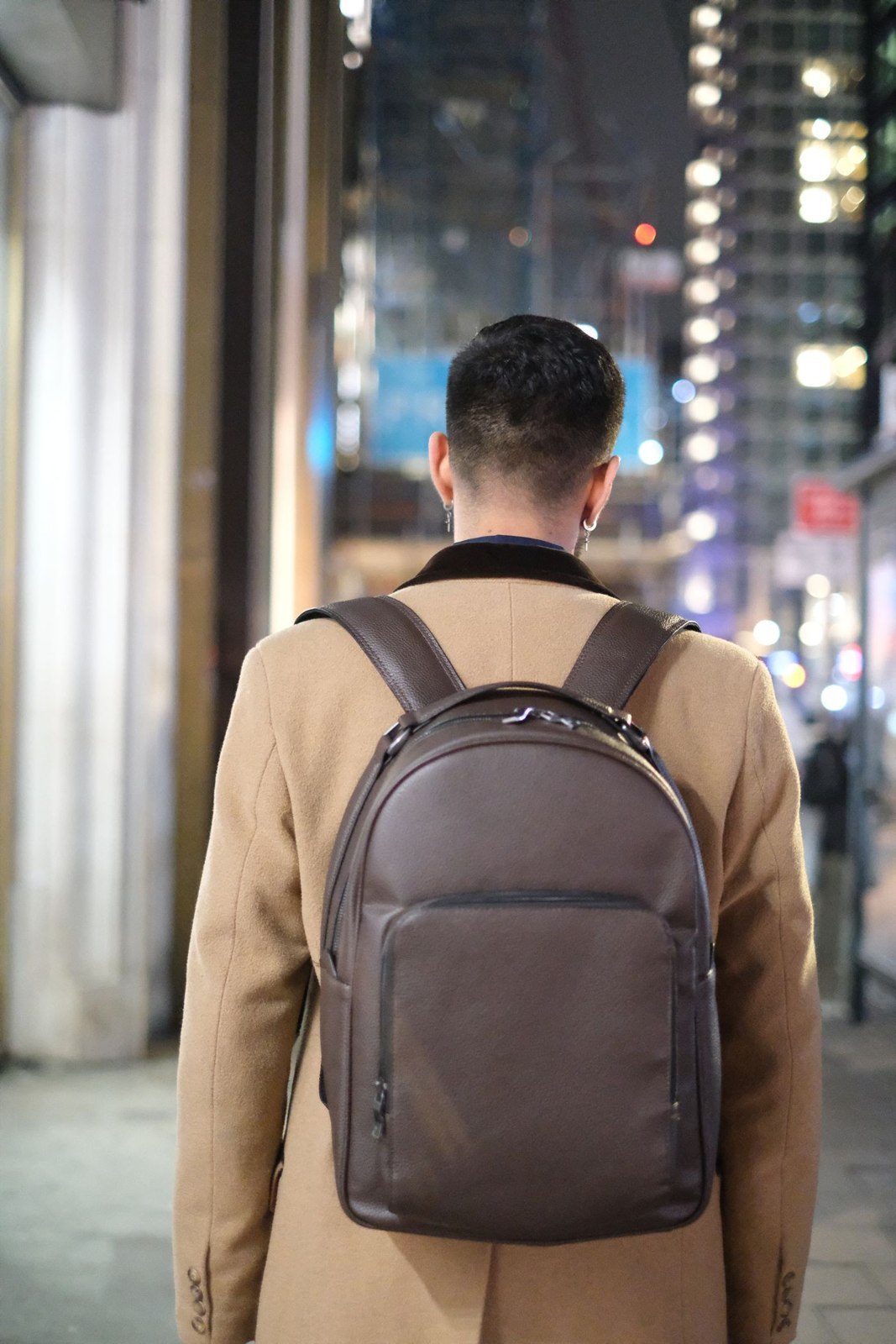
Treat the coat and the loaded backpack as a combination during the fitting.
The coat changes the fit
A backpack adjusted over a T-shirt may sit differently over an overcoat. Extra cloth changes the effective strap length, and a thick collar can compete with the top of the bag. Try the combination with your ordinary load. An empty backpack that looks neat in a mirror tells you little about how it will pull against the coat on the way to work.
Notice whether the straps drag the shoulder line forward or bunch the fabric beneath the arms. Loosening them may help, but allowing the bag to hang very low introduces another problem. Adjust gradually and walk between changes. The useful position is one that remains comfortable and stable, not a fixed height borrowed from someone else's photograph.
Choose a scale, not a dress code
A compact backpack can sit quietly against a long coat, while a large hiking shape becomes a clear part of the silhouette. Either may be appropriate for what you carry. Avoid buying a bag too small for a laptop merely because it looks restrained. A stretched zip and overloaded front pocket usually make the result less tidy, not more.
Dark, matte surfaces often combine easily with wool textures, but there is no requirement for black leather. Canvas, woven synthetics and other materials can work if their construction and appearance suit the rest of your clothes. Decide whether you want the bag to blend in or create a contrast, then judge that choice with the coat actually on.
Pack for the moments between destinations
Place a laptop in the compartment intended for it, using any protective sleeve required by your routine. Check the actual dimensions rather than relying on a general screen-size label: cases and accessories add bulk. Keep heavier objects arranged so they do not become a single hard lump against the coat. Follow the bag's carrying guidance, and avoid treating extra capacity as an invitation to carry everything you might conceivably need.
Think through a typical pause: buying a ticket, sitting on a train or reaching a desk. Can the bag stand or rest somewhere appropriate while you remove the coat? Is the opening accessible without spreading the contents across a seat? These questions reveal whether internal organisation helps you or simply adds pockets that remain empty. One useful compartment may serve better than a complicated interior.
A removable pouch can carry small work items when you switch bags, but it should not make the main compartment difficult to close. Before purchasing a larger backpack, remove the objects you routinely carry home without using. If the remaining load still strains the bag or coat, choose a different size or carrying format. Style does not require retaining an arrangement that repeatedly becomes awkward.
Check contact points
Look at the back panel, strap edges and hardware where they meet the coat. Rough components may be unpleasant against delicate fabric. This inspection cannot predict every mark from repeated wear, but it can reveal obvious rubbing points. Avoid placing a dirty or wet bag directly against a clean coat, and follow the bag's cleaning instructions when needed.
Access matters during travel. If every small item requires removing both straps and opening the main compartment, decide whether that suits your routine. A reachable pocket can be useful, but keep security in mind when choosing where valuables go. Do not assume that a hidden-looking zip is inaccessible to everyone else.
Finally, try taking the bag off without pulling the coat halfway off your shoulders. If the combination demands constant rearrangement, change the adjustment or reconsider the shape. The goal is an outfit that lets you move through the day without repeatedly repairing its appearance.