Outfits
Dressing for a train journey and an evening arrival
Plan the transition from a long seat to the destination without packing a second complete wardrobe.
Separate the journey from the arrival requirement
First establish what happens after the train. Checking into a hotel gives you time to change; going directly to dinner does not. A vague intention to freshen up is not the same as knowing you have somewhere to do it. If the arrival involves a stated dress code, use that as a fixed requirement and work backwards towards a comfortable travel version.
Choose trousers you have already worn seated for a while. The waistband, rise and pocket contents become more noticeable on a long journey than during a quick fitting. A relaxed straight cut can look tidy without gripping the knees. Avoid relying on a belt to hold an unsuitable waist in place, since repeated sitting and standing will keep exposing the problem.
Make the main outfit work on its own
A plain shirt or knit with dark trousers can cover both travel and a moderately dressed evening, depending on the venue. A blazer is useful only if it fits comfortably and can be managed when removed. If you plan to travel without it on, consider where it will go rather than assuming an overhead rack will provide a clean, crease-free home.
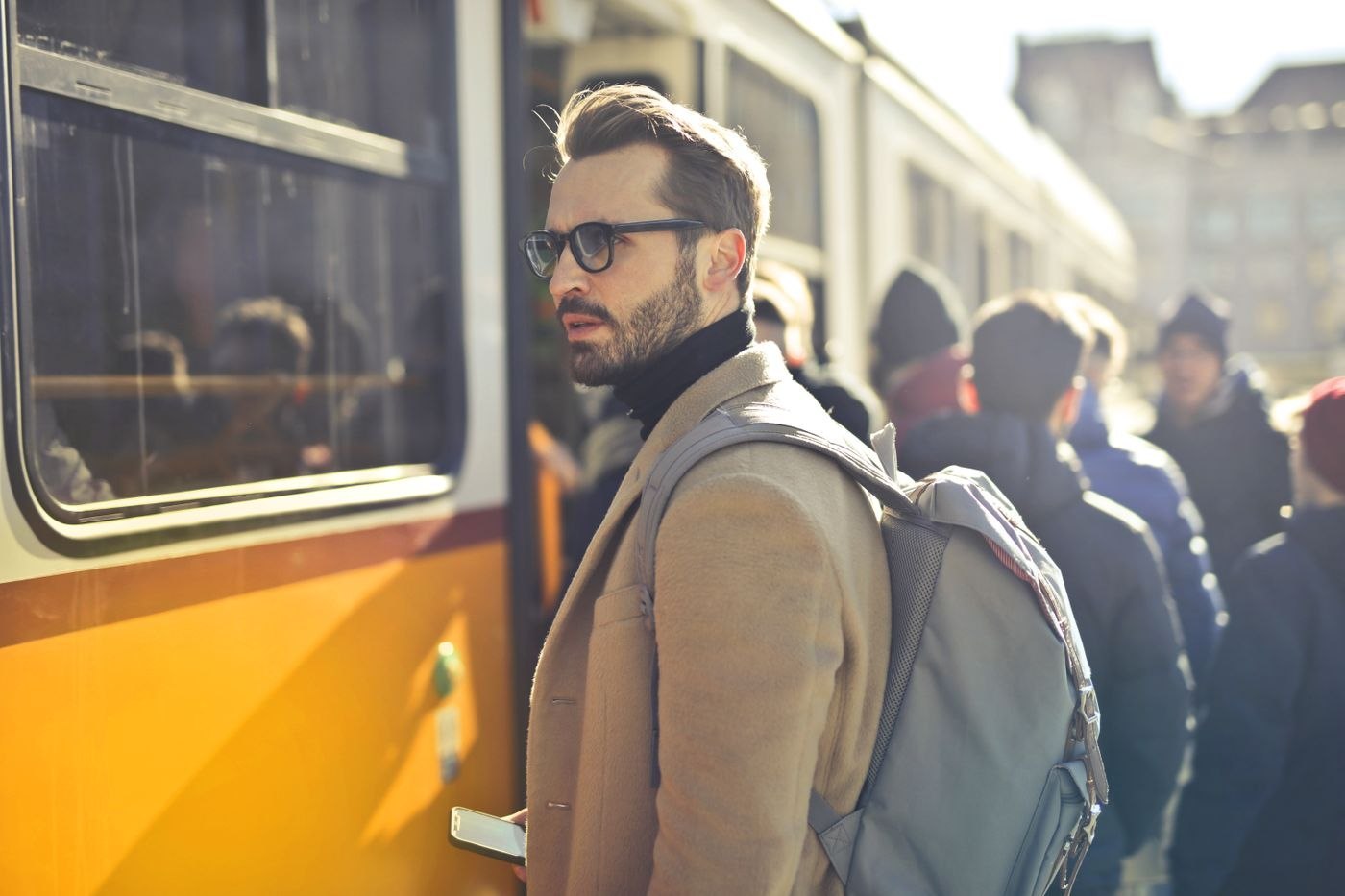
The top should look acceptable without your coat. On a warm carriage, you may remove more layers than expected. An undershirt chosen only to be hidden is not always the best final visible layer. Equally, wearing a heavy jumper throughout the trip because it will not fit in your bag can make the journey unnecessarily awkward.
Carry one targeted change
A fresh shirt may make a bigger difference at arrival than a second pair of trousers. Pack it where you can reach it without emptying the whole bag, and keep it away from shoes and toiletries. If changing is realistic, allow time for it. If it is not, wear the shirt you need and use a removable outer layer during the journey.
A change of socks or a small grooming item can be useful, but do not turn the transition into a suitcase full of contingency products. Choose according to the actual length of the trip and your habits. Anything liquid should be closed securely and separated from clothing. A leaking container is a more immediate wardrobe problem than a slight crease in a shirt.
Choose shoes for the entire route
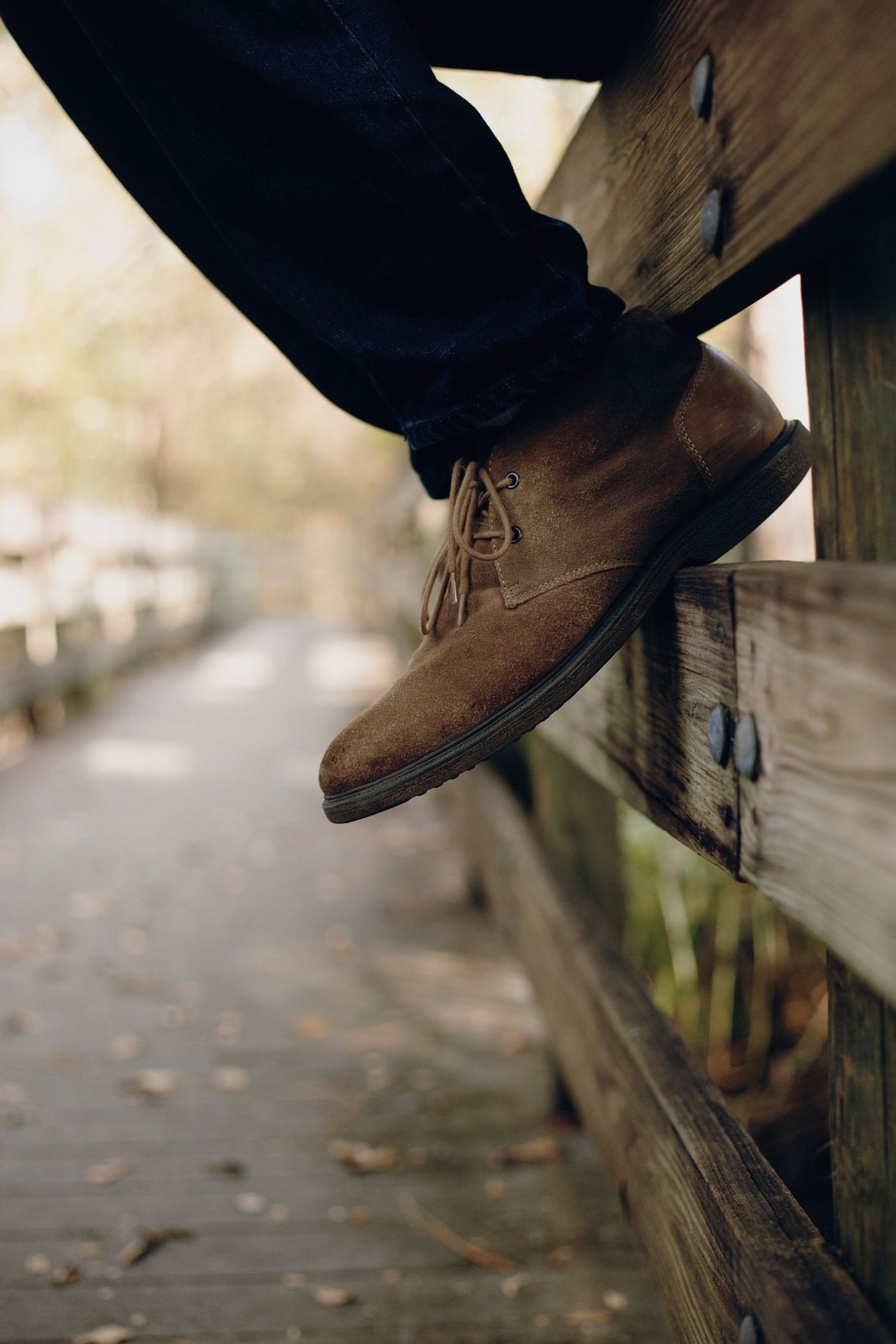
The route includes stations, platforms and the walk after arrival, not just the train seat. Familiar shoes with suitable soles are more useful than a pristine pair you can barely walk in. If the evening genuinely calls for different footwear, pack that pair deliberately and keep the travel shoes contained when you change. Otherwise, use one pair that serves both settings.
Check the trouser hem with those shoes. A longer hem can collect dirt or catch under the heel while you handle luggage. Pockets should remain light enough that keys and a phone do not press into you throughout the journey. Keep travel documents reachable in a bag pocket instead of distributing everything across the clothes you want to look tidy later.
Leave a margin at the destination
Allow a few minutes to remove the coat, settle the shirt and check the outfit after sitting. Some creasing is ordinary and does not mean the clothes have failed. If you repeatedly need a full transformation between train and dinner, the schedule may need a changing stop rather than a more complicated outfit. The most useful travel clothing is the combination that lets you arrive, move comfortably and join the evening with minimal rearranging.