Wardrobe
A short-sleeved shirt with a tidy silhouette
The sleeve opening and body length matter more than whether the shirt has a bold print.
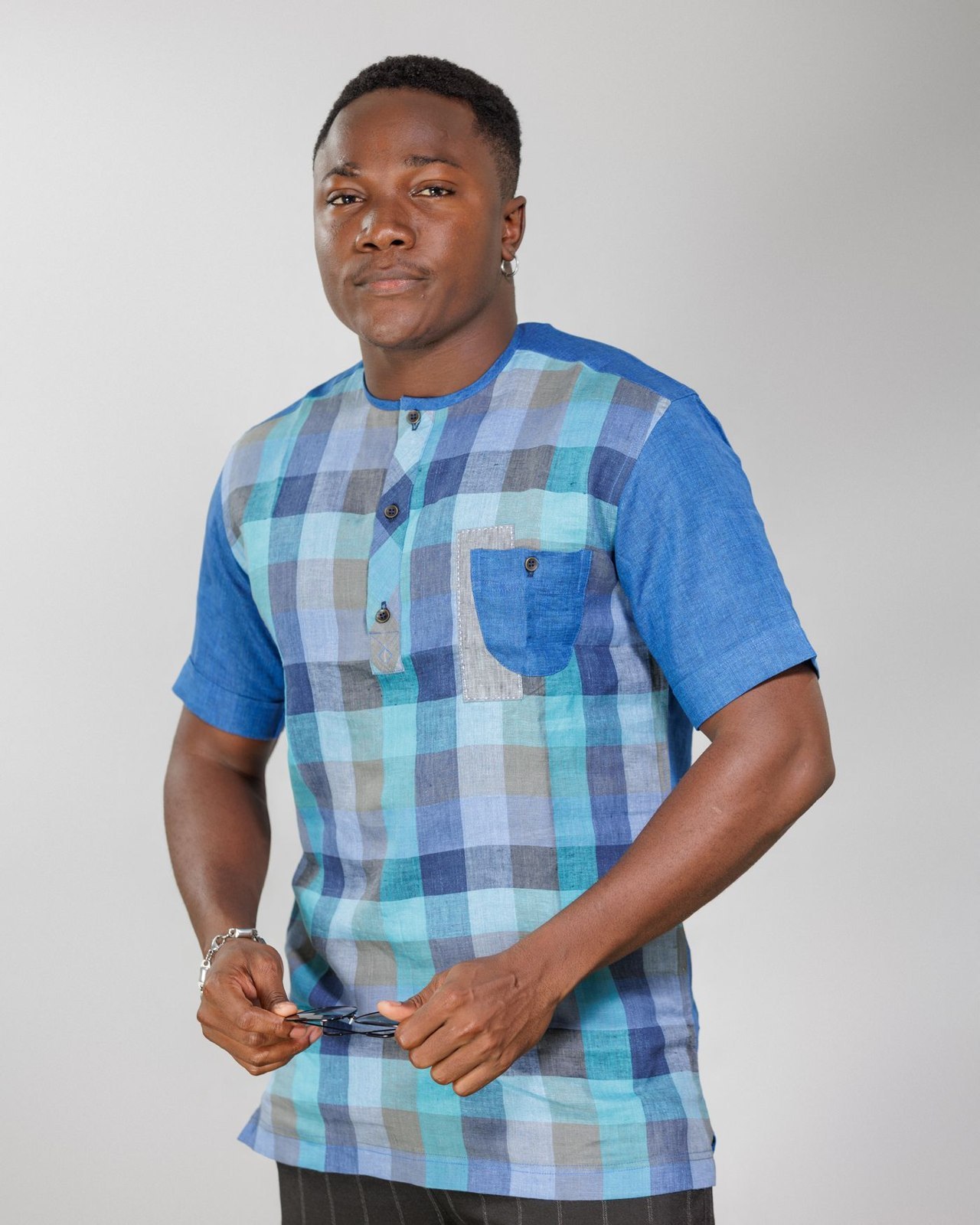
A short-sleeved shirt can look relaxed without looking oversized, and it can be roomy without being untidy. Start with the shape rather than the pattern. Put your arms down naturally and look at the sleeve openings. If they stand far away from the upper arm, decide whether you enjoy that boxy effect. If they grip tightly, check that reaching forward remains comfortable.
The shoulder seam helps establish the outline, but a dropped shoulder may be deliberate. Do not reject it simply because it differs from a formal shirt. Instead, consider how the sleeve and body relate. A broad shoulder with a very narrow torso can feel less coherent than a relaxed shape throughout.
Decide whether it belongs outside the waistband
Many short-sleeved shirts are intended to be worn untucked, but their lengths vary considerably. Check the front, side and back. A long curved tail can overwhelm a pair of shorts, while a cropped straight hem may rise more than expected when you lift an arm. Try the shirt with the actual trouser rise you use most often.
For tucked wear, make sure there is not too much cloth gathering at the waist. A light fabric can fold more easily than a dense one, but it can also show creases and outlines differently. The aim is a comfortable waist, not a perfectly flat photograph maintained by holding still. Sit down before deciding that the tuck works.
Let pattern be the second choice
Once the shape works, choose between plain cloth and a print. A plain olive or pale blue shirt gives the sleeves and collar more visual importance. A large pattern becomes a stronger focal point and often benefits from simpler trousers. Neither option requires matching shorts or a themed accessory.
Leave enough of the neckline open for comfort, then check how the collar lies. Some open collars are designed to spread; others sit closer. If a T-shirt underneath creates several competing edges, try the shirt alone or choose a lower, simpler inner neckline. Finish with familiar shoes and assess the whole outfit. A tidy silhouette comes from compatible shapes, not from making every piece narrow.