Wardrobe
A raincoat that fits over a jacket
Test the second layer at the shoulders, sleeves and hem—not just across the chest.
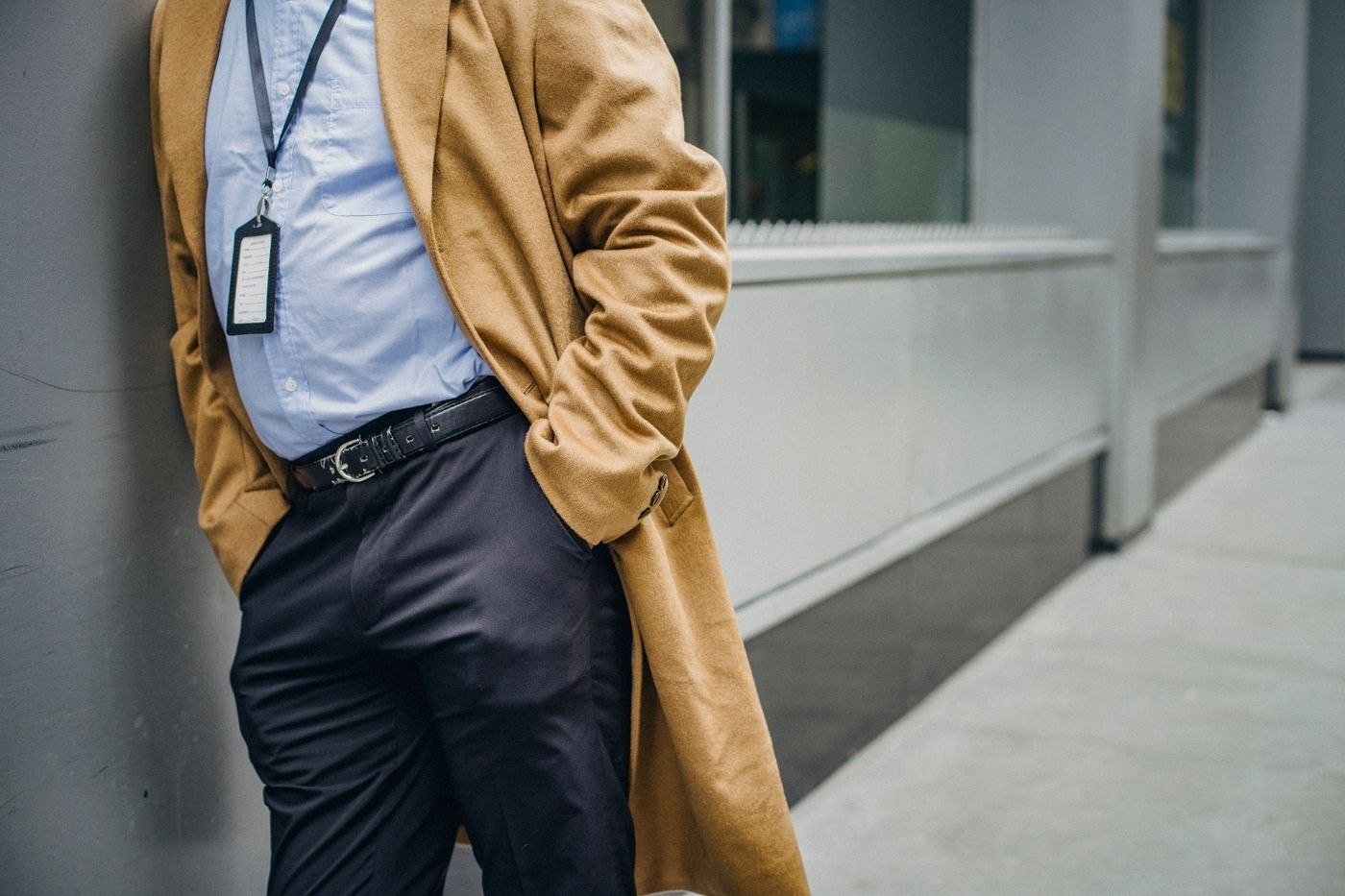
Bring the jacket to the fitting
A raincoat that fits over a shirt may not fit over a blazer. The extra layer occupies space at the shoulder, upper arm and collar, where a simple chest measurement tells only part of the story. Wear the jacket you intend to cover and fasten both garments as you would outdoors. Then reach forward, raise an arm and sit down.
Watch the raincoat sleeves. If the inner jacket cuff catches every time you move, the outer sleeve may be too narrow or its lining may not slide easily over the layer beneath. A larger size can help, but may also lengthen the sleeves beyond what you want. Compare a cut designed with more layering room before accepting an oversized fit everywhere.
The lower edge matters
Check that the jacket hem does not protrude in a way you dislike. A small visible edge is not a functional disaster, but a much shorter raincoat may defeat the coverage you intended. Look from the back as well as the front, especially if the jacket has a longer tail or the raincoat has a curved hem.
If you carry a shoulder bag, test it too. A strap can press the two layers together and change how the collar sits. Put ordinary items in the pockets rather than evaluating the coat completely empty. The best fitting-room result is the one that resembles your commute, not the one achieved by holding your arms away from your sides.
Separate the shape from the weather claim
The name raincoat does not tell you everything about water protection. Check the specific maker's description, including any distinction between water resistance and waterproof construction. A hood, covered fastening or taped seams may be relevant, but appearance alone is not a performance test. Choose the protection for the conditions you expect, rather than assuming a long silhouette guarantees it.
Finally, consider indoor use. Will the coat hang at work, fold into a bag or remain over your arm on a crowded train? A heavier structured coat and a lightweight shell can solve different problems. If the main requirement is covering a blazer during occasional showers, you may not need the same garment as someone walking outdoors for hours. Let the routine decide the compromise.