Outfits
A denim shirt with non-denim trousers
Change the lower fabric to give a familiar shirt a different setting.

Notice how heavy the shirt is
A denim shirt can be a light, soft layer or a substantial piece close to an overshirt. That difference affects what works beneath it. A thin shirt can tuck into tailored trousers without much bulk; a heavy one may sit more comfortably over a plain T-shirt and a relaxed waistband. Begin with the garment you have rather than a generic picture of denim.
The wash matters too. Strong fading and contrast stitching bring more casual detail than a uniform dark blue. Neither has to be avoided, but the trousers should make sense beside that level of texture. A very polished suit trouser may create a sharper contrast than you want, while matte cotton or softly textured wool can provide an easier transition.
Three directions without blue jeans
Stone chinos create a clear light-and-dark contrast with a blue shirt. Grey trousers make a quieter combination, especially with a less distressed shirt. Brown corduroy gives both halves a visible surface and can feel more substantial in cooler weather. Choose the version that fits your day rather than treating one trouser colour as the correct partner for all denim shirts.
Check the amount of room in both pieces. A broad shirt over narrow trousers makes the upper half dominant; a tucked shirt with a wider leg distributes the volume differently. Neither needs to be hidden, but the choice should be deliberate. If the shirt bunches at the waist, try wearing it out only if the hem was designed to hang comfortably that way.
Finish the shirt as a shirt
Buttoning the cuffs and keeping the collar simple can make denim feel more considered without pretending it is formal. Rolled sleeves are optional, not a requirement to show that the fabric is casual. Avoid an elaborate roll that keeps slipping or creates a tight band at the forearm. The shirt should remain easy to move in.
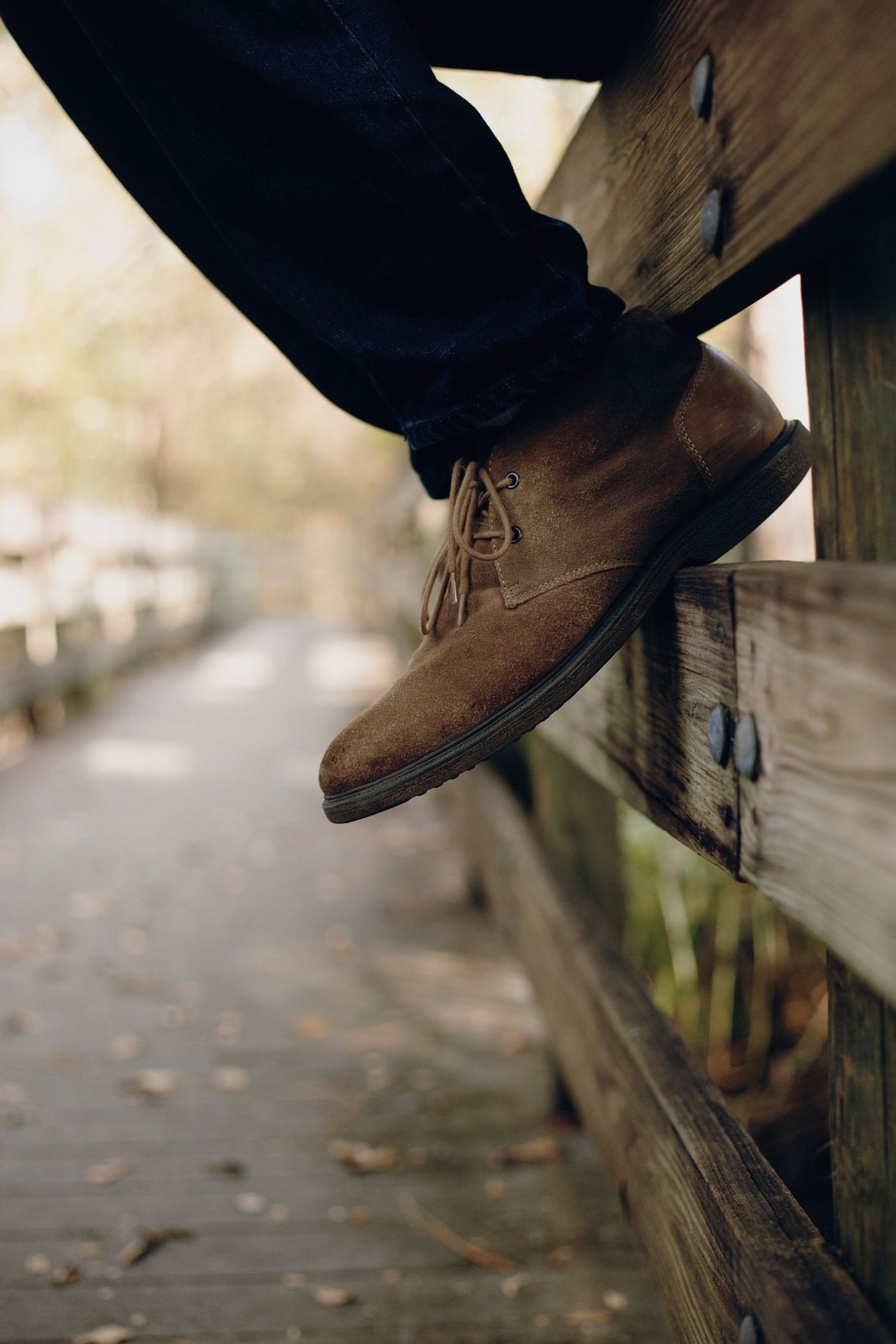
Brown boots, loafers or plain trainers can all suit different versions. Select their shape in relation to the trouser opening and their formality in relation to the occasion. A leather belt may help define a tucked waist, but matching it exactly to the shoes is unnecessary. The change of trouser fabric already gives the denim shirt a new context; additional workwear references are not compulsory.